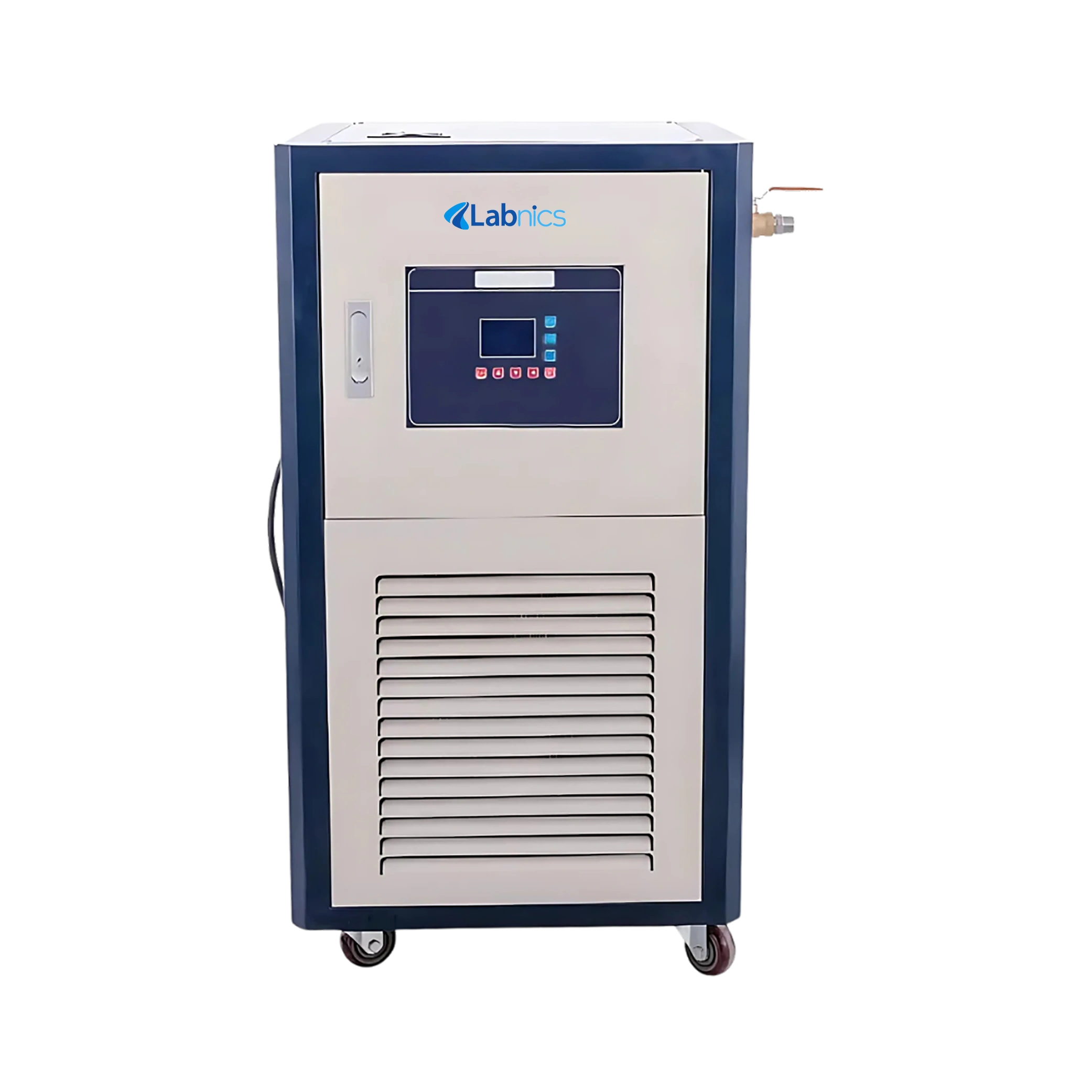
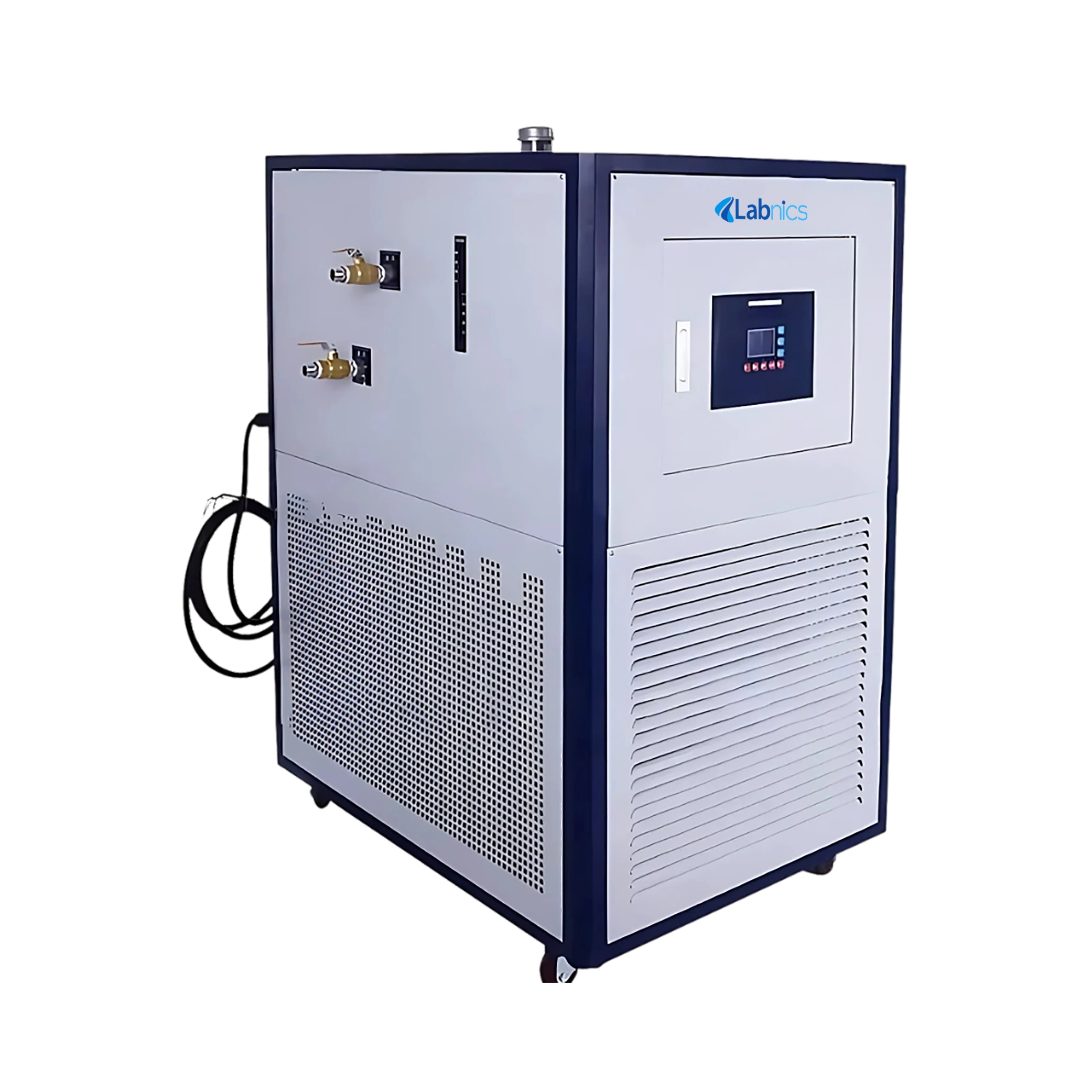
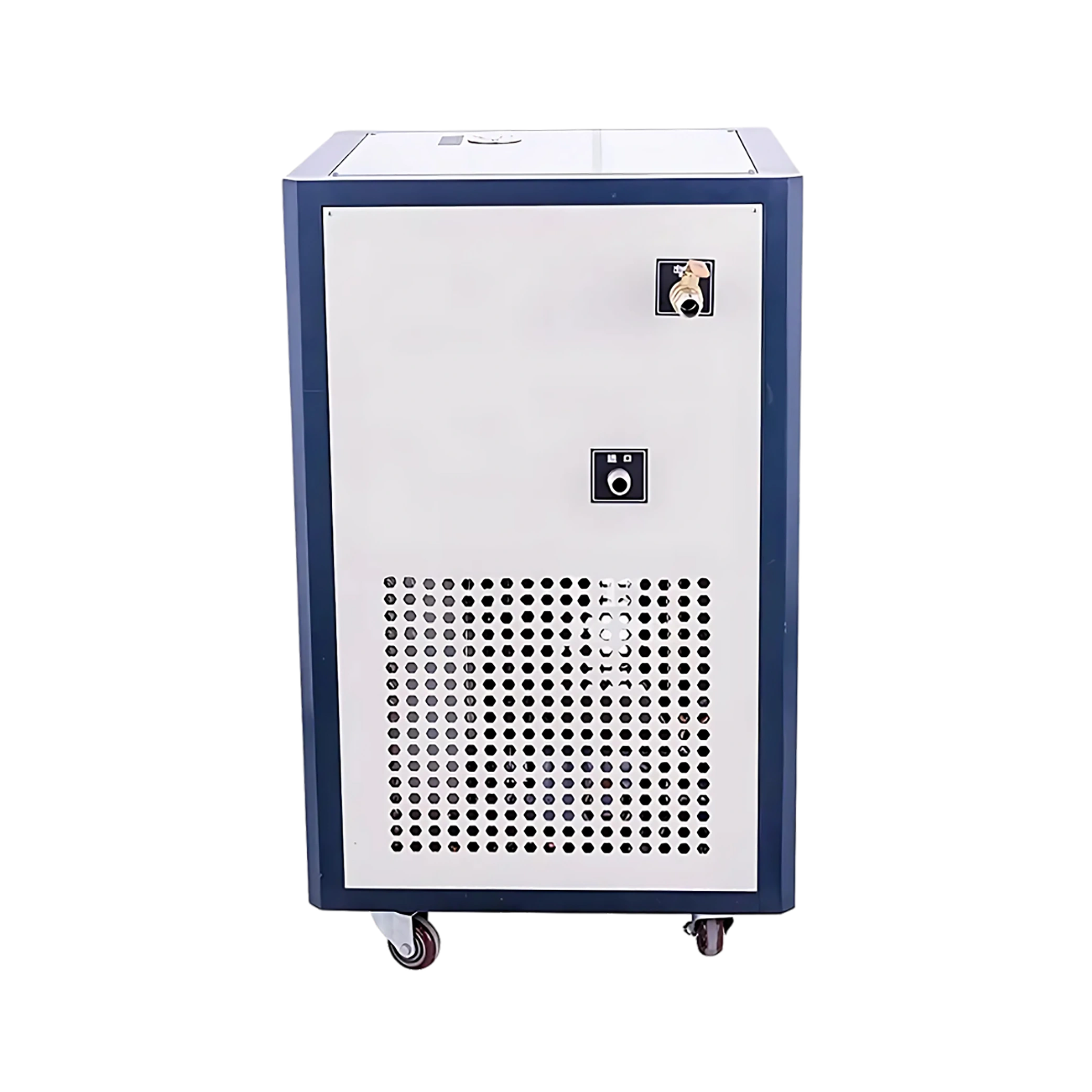
Refrigerated and Heating Circulator NRHC-406 handles a 30L capacity and is ideal for efficient thermal fluid circulation. It supports a wide temperature range from -20°C to 200°C, ensuring versatile application. This unit uses a PT100 temperature sensor for precise measurements. It withstands a maximum pressure of ≤0.4MPa, offering safe performance. Our circulator comes with a corrosion-resistant cold plate sprayed body for enhanced durability.
Refrigerated and Heating Circulator NRHC-406 is used to provide precise temperature control for processes requiring both heating and cooling. It is applied in chemical reactors, pharmaceutical research, biotechnology labs, and industrial process control systems.
FAQ for Refrigerated and Heating Circulator NRHC-406
1: Is the Refrigerated and Heating Circulator NRHC-406 durable for long-term use?
Our Refrigerated and Heating Circulator is built with a corrosion-resistant cold plate sprayed body. This enhances its durability and allows for long-term operation in demanding environments.
2: Does the Refrigerated and Heating Circulator NRHC-406 provide real-time monitoring?
The Refrigerated and Heating Circulator is equipped with an LCD that shows real-time temperature readings and system status. This helps monitor operations continuously and make quick adjustments when needed.
3: How does the Refrigerated and Heating Circulator ensure the long service life of the heat transfer fluid?
Our Refrigerated and Heating Circulator features a fully closed-loop circulation system that prevents oxidation and moisture absorption. This reduces fluid degradation, minimizing the need for frequent replacements.
4: How often should the heat transfer fluid be replaced?
The frequency of fluid replacement depends on usage, but with the closed-loop system, the heat transfer fluid can last longer. It's recommended to check fluid quality every 6–12 months and replace it if signs of oxidation, contamination, or degradation appear.
5: What kind of maintenance does the compressor require?
The closed-type compressor requires minimal maintenance. However, regular checks for unusual noise, vibration, or reduced performance can help detect early signs of wear or malfunction.