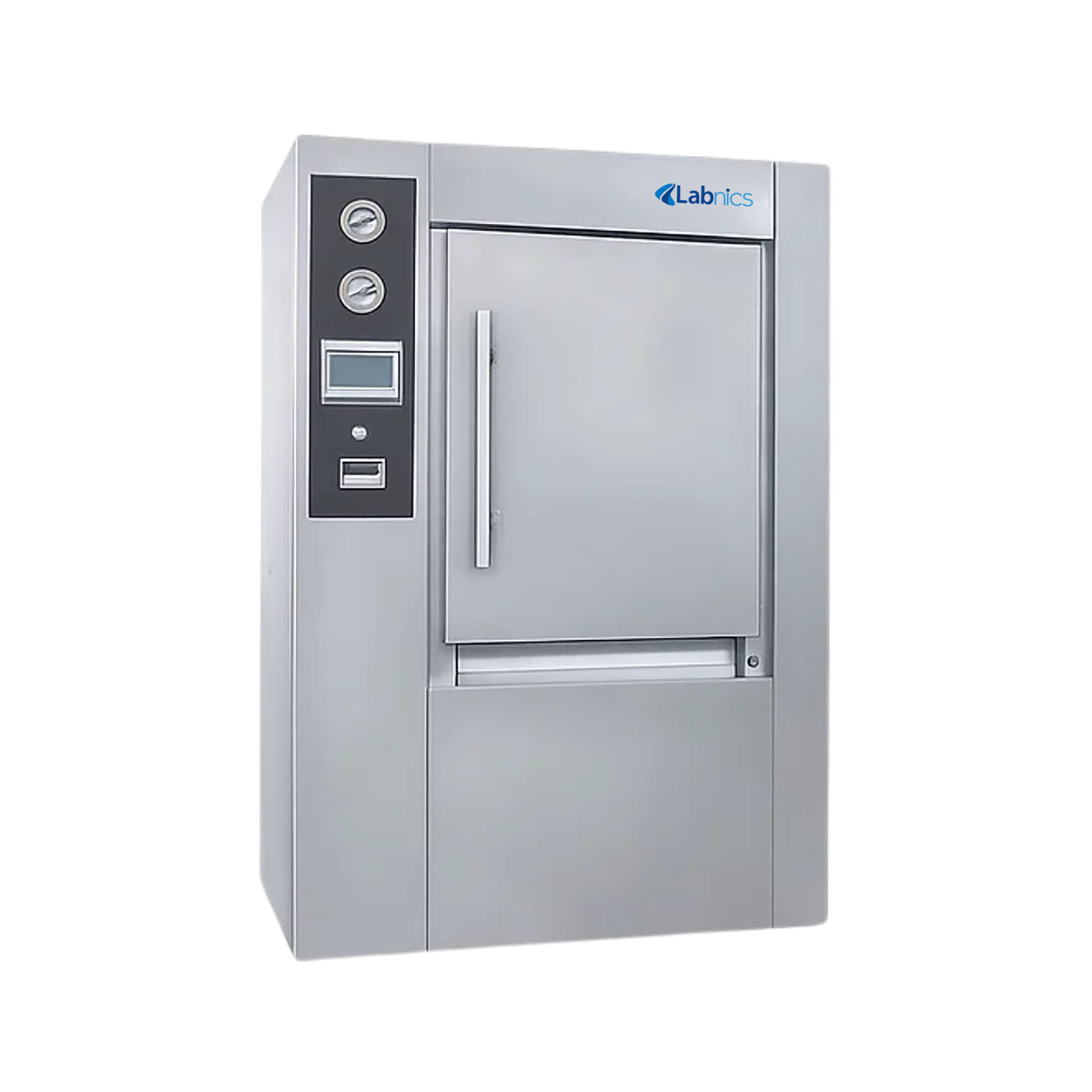
Pulse Vacuum Autoclave NPVA-109 is used to provide effective sterilization by applying high-pressure steam and pulsating vacuum to penetrate and sterilize items thoroughly. It is widely applied in pharmaceutical, bioengineering, medical, healthcare, and research industries.
FAQ for Pulse Vacuum Autoclave NPVA-109
1: How is the sterilization process monitored and controlled in the Pulse Vacuum Autoclave NPVA-109?
The Pulse Vacuum Autoclave is controlled by a Siemens PLC and touchscreen interface, allowing full automation and real-time display of pressure, temperature, and time. It also has a built-in micro-dot printer and paperless recorder to document each cycle.
2: What kind of filtration is included for the air exhaust?
The Pulse Vacuum Autoclave includes a high-efficiency air filter with 2-micron precision, achieving a sterilization rate of 99.97%. This helps maintain a clean, sterilization environment and prevents microbial contamination.
3: How durable is the chamber and door sealing system?
The chamber features a robust rectangular structure with European-style reinforcing ribs. The door sealing ring is made of high-grade, tear-resistant silicone rubber, capable of withstanding up to 1500 usage cycles while maintaining a secure seal.
4: What is the advantage of the independent steam inlet option in the Pulse Vacuum Autoclave NPVA-109?
The independent steam inlet prevents steam from passing through the carbon steel jacket, reducing the risk of contamination. This also helps avoid jacket pressure drops that could affect drying performance, ensuring more efficient and cleaner sterilization.
5: How long does the filter last and how is it replaced?
The 2-micron air filter has a long life and offers 99.97% filtration efficiency. Replacement frequency depends on usage but is typically once every 6–12 months. The design allows easy access and replacement.
6: How does the vacuum function improve sterilization performance?
The vacuum function removes trapped air from the chamber and instruments, allowing steam to reach all surfaces effectively. This ensures uniform sterilization, even for items with intricate designs or internal cavities.
7: Does the Pulse Vacuum Autoclave have safety features during operation?
The Pulse Vacuum Autoclave is equipped with automatic door locking and safety interlocks that prevent the chamber from being opened mid-cycle. These features help maintain safe operation and prevent steam-related accidents.
8: What material is used for the chamber construction?
The chamber is made of high-grade, corrosion-resistant stainless steel that offers durability and easy cleaning. It helps maintain hygiene and withstands high-temperature steam over repeated use.
9: How often should the Pulse Vacuum Autoclave be maintained?
Regular maintenance should be done monthly for basic cleaning and quarterly for more detailed inspections. Preventive servicing helps maintain optimal performance and extends the machine’s lifespan.