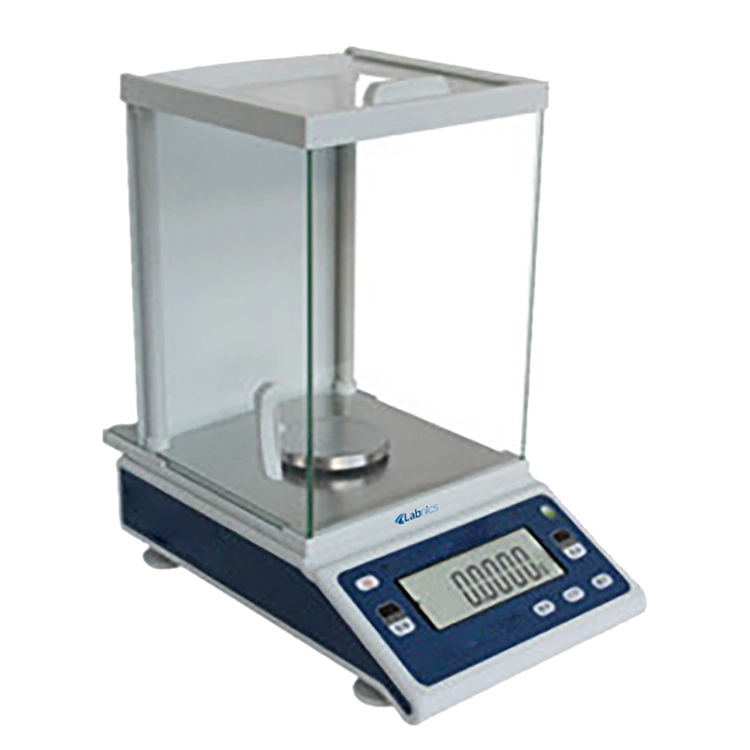
It is widely used for weighing of samples, precipitates or biological specimens of relatively smaller quantities. It is useful in areas like Organic and analytical chemistry labs, Preparatory labs of Biotechnology, Microbiology, Forensic sciences, Bioanalytical and Nutraceutical testing laboratories, and Bioorganic divisions etc.
FAQ for Analytical Balance NAB-104
1: What does the full-range tare function do, and why is it important?
The full-range tare key allows users to reset the display to zero regardless of the weight of the container or vessel, enabling accurate measurement of only the sample mass.
2: How does the balance ensure accuracy during weighing of volatile or reactive substances?
It is enclosed with a protective glass shield to prevent air current interference, and its corrosion-resistant body offers added protection during chemical analysis.
3: What should I do if the displayed weight does not return to zero after removing the sample?
Use the tare function to manually reset the weight to zero. If this persists, clean the pan, ensure nothing is touching it.
4: What happens if the Analytical Balance NAB-104 is accidentally overloaded?
The balance includes an over-load protection feature that prevents mechanical damage to internal components. However, frequent overloading should still be avoided to preserve calibration.
5: Is the Analytical Balance NAB-104 suitable for weighing biological or pharmaceutical samples?
Yes, its 0.1 mg readability and stable design make it ideal for weighing small quantities of biological specimens, powders, or pharmaceutical compounds in quality control labs.
6: Why does the Analytical Balance have a glass shield?
The transparent glass shield is designed to block external air drafts and dust. This ensures consistent weighing conditions and prevents fluctuation in readings. It helps protect both the sample and the measurement integrity.
7: Is the Analytical Balance easy to calibrate?
Most analytical balances include internal or external calibration options. Internal calibration is automatic and ensures precision without manual effort. External calibration allows the use of certified weights to validate accuracy regularly.
8: How durable is an Analytical Balance?
Analytical balances are designed with sturdy materials and a sealed weighing chamber. This makes them durable and resistant to environmental contamination. Proper handling and regular maintenance extend their lifespan.
9: How often should an Analytical Balance be cleaned?
Cleaning should be done regularly, ideally after each use. This prevents dust, residue, or chemical spills from affecting accuracy. Use a soft brush or lint-free cloth and avoid harsh chemicals that may damage internal components.