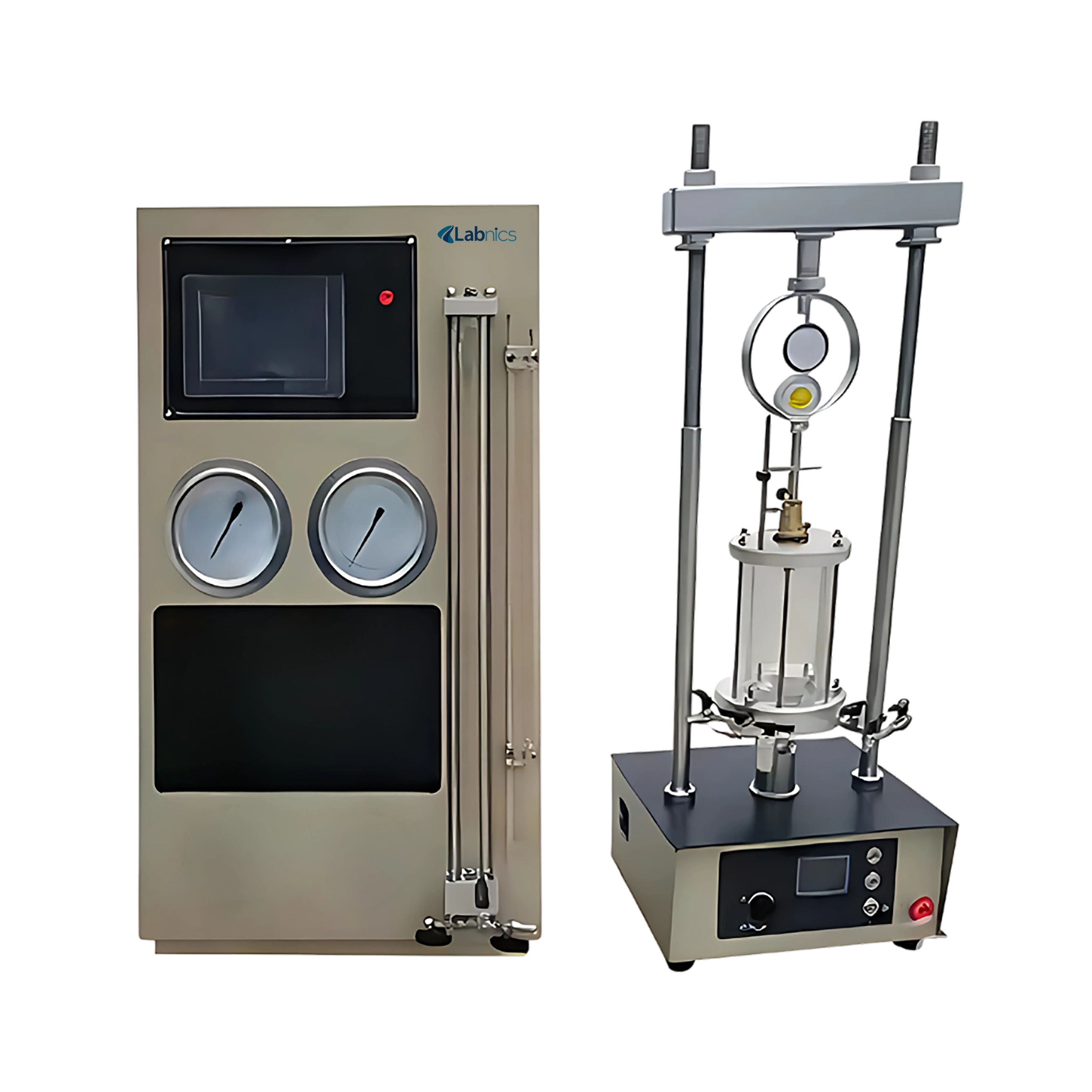
FAQ for Triaxial Test Apparatus NTATA-100
1: What is the maximum axial load capacity of the Triaxial Test Apparatus NTATA-100?
The Triaxial Test Apparatus NTATA-100 offers a maximum axial load capacity of 10 kN, allowing it to handle a wide range of soil samples for geotechnical testing. This ensures that strength and deformation measurements are accurate and reliable for engineering applications.
2: How precise is the strain rate control in the Triaxial Test Apparatus NTATA-100?
Triaxial Test Apparatus NTATA-100 provides electronic strain rate control within a range of 0.0024 to 4.5 mm/min, enabling consistent and repeatable results. This precision is critical for assessing soil behavior under controlled stress conditions.
3: Does the Triaxial Test Apparatus NTATA-100 measure both pore and ambient pressure?
Yes, Triaxial Test Apparatus NTATA-100 can accurately measure pore pressure up to 1.000 MPa and ambient pressure up to 1.000 MPa. This makes it versatile for different types of soil tests in research and engineering projects.
4: What is the volume change measurement capacity of this Triaxial Test Apparatus NTATA-100?
The Triaxial Test Apparatus NTATA-100 can detect volume changes from 0 to 25 mL with 0.1 mL resolution. This feature is essential for understanding soil consolidation and deformation characteristics.
5: Is the Triaxial Test Apparatus NTATA-100 suitable for long-duration tests?
Yes, Triaxial Test Apparatus NTATA-100 durable design, low power consumption, and stable performance make it ideal for extended testing periods. This ensures consistent results even in demanding research environments.
6: What is a Triaxial Test Apparatus used for?
A Triaxial Test Apparatus is used to determine the shear strength, compressibility, and stress-strain behavior of soil samples. It helps engineers understand how soil will perform under real-world load and pressure conditions.
7: Where is the Triaxial Test Apparatus commonly applied?
It is widely used in geotechnical laboratories, research institutions, and construction industries to evaluate soil strength and stability before designing foundations, tunnels, and embankments.
8: Why is the Triaxial Test important in soil mechanics?
The test provides accurate and reliable data on soil stability, shear strength, and deformation, which are crucial for ensuring safe and cost-effective construction and infrastructure projects.
9: What makes the Triaxial Test Apparatus reliable for testing?
It allows precise control of loading and pressure conditions, simulates field stress environments, and delivers repeatable results, making it a trusted tool for soil mechanics and engineering applications.