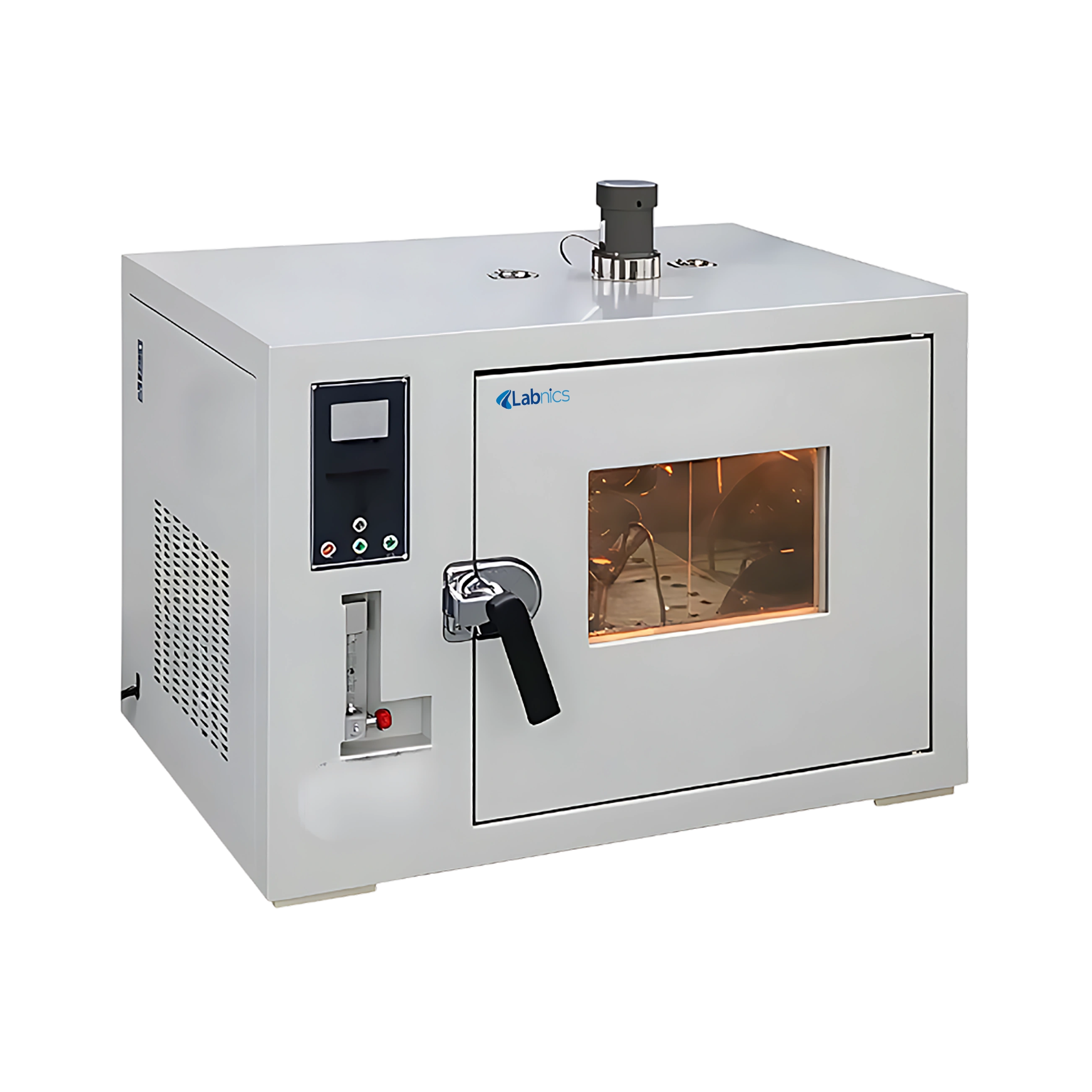
Thin Film Oven NTFO-100 is used for determining the effects of heat and air on asphalt materials by simulating short-term aging. It is widely used in road construction laboratories, material testing centers, and quality control departments.
FAQ for Thin Film Oven NTFO-100
1: What is the main purpose of the Thin Film Oven NTFO-100?
Thin Film Oven NTFO-100 is designed to determine the effects of heat and air on asphalt binders by simulating short-term aging conditions. It ensures precise control of temperature and airflow for consistent and repeatable results. This makes it an essential tool in asphalt testing and quality control. Mimicking real-world paving conditions, it helps predict the long-term performance of materials.
2: How accurate is the temperature control in this Thin Film Oven NTFO-100?
The oven maintains a working temperature of 163 °C with a control precision of ±0.5 °C. This high accuracy ensures that every test is conducted under strictly controlled thermal conditions. Such precision is critical when evaluating material properties for compliance with standards. It also minimizes testing errors caused by temperature fluctuations.
3: What features ensure even heat distribution during testing in Thin Film Oven NTFO-100?
The Thin Film Oven NTFO-100 includes a rotating turntable operating at 15 ± 0.2 r/min.
This rotation ensures that all samples are evenly exposed to heat throughout the testing period. Combined with the controlled airflow from the built-in compressor, it creates uniform aging conditions. As a result, test results are highly consistent and representative of actual use.
4: Where is the Thin Film Oven NTFO-100 commonly used?
Thin Film Oven NTFO-100 is primarily used in road construction laboratories, material testing facilities, and quality control centers. It is especially important for organizations involved in asphalt binder research and development. Government agencies and contractors use it to verify compliance with paving standards. Its compact design and reliability make it suitable for both large and small lab setups.
5: Does the Thin Film Oven NTFO-100 comply with standard testing methods?
Yes, it is designed to comply with international standards such as ASTM D1754 for asphalt binder testing. It has temperature stability, airflow control, and timer functions align with testing requirements. Its performance has been optimized to deliver consistent and repeatable results in accordance with specifications. This ensures that test data can be confidently used for regulatory and performance evaluations.
6: What is the primary purpose of a Thin Film Oven?
A Thin Film Oven is designed to measure the effect of heat and air on asphalt binders, simulating long-term aging that occurs during pavement service life. It helps researchers and engineers assess how bitumen properties change over time.
7: What standards does this Thin Film Oven comply with?
Most Thin Film Ovens are manufactured in compliance and other international test methods, ensuring results are consistent, comparable, and accepted globally in asphalt performance evaluation.
8: How is uniform heating achieved in this Thin Film Oven?
The Thin Film Oven uses a rotating plate system combined with controlled airflow to evenly distribute heat across the bitumen film, ensuring oxidation and aging occur uniformly throughout the sample.
9: Can Thin Film Oven be used for materials other than asphalt binders?
While primarily designed for asphalt binder aging tests, some research labs adapt Thin Film Ovens for testing other materials that require controlled heating and oxidation under specific conditions.
10: What safety features are included in Thin Film Oven?
Thin Film Ovens typically feature over-temperature protection, insulated chamber walls, and precision temperature controllers to prevent overheating and ensure safe, reliable operation in laboratory environments.