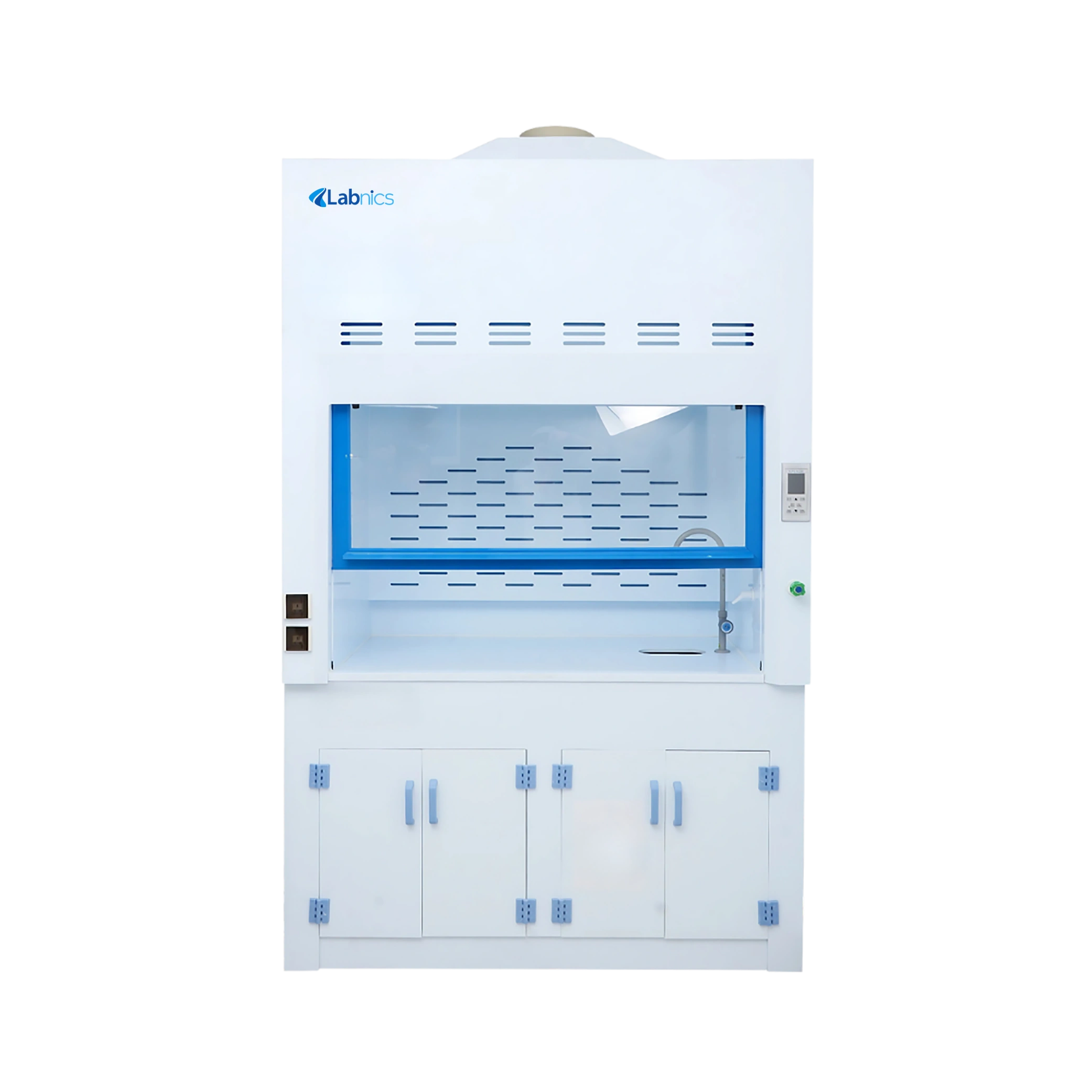
Polypropylene Fume Hood NPFH-100 is constructed with an 8 to 12 mm white PP body and a 5 mm tempered glass sash for chemical resistance and safety. It features a digital control panel for fan, light, sockets, sterilizer, and damper operations. This is equipped with a 30W LED light for bright illumination and smooth sash movement with a weight-balanced mechanism. It is integrated PP liner and baffle enhance durability and resistance to corrosive chemicals. Our junction box supports multiple for flexible use in laboratories.
Polypropylene Fume Hood NPFH-100 used in labs for protection during hazardous sample preparation. It is used in chemical, pharmaceutical, research, and educational laboratories.
FAQ for Polypropylene Fume Hood NPFH-100
1: What material is the Polypropylene Fume Hood NPFH-100 made from?
It is made from high-quality white polypropylene for durability and resistance to strong acids and alkalis.
2: Does Polypropylene Fume Hood NPFH-100 include digital controls?
Yes, it comes with a digital control panel to operate fan, lights, sockets, sterilizer, and damper easily.
3: How safe is the glass sash in NPFH-100?
The sash is made from 5?mm explosion-proof tempered glass, ensuring operator safety during chemical handling
4: What is the exhaust capacity?
The hood provides an exhaust airflow between 700–1300?m³/h for effective ventilation.
5: Where is Polypropylene Fume Hood NPFH-100 commonly used?
It is widely used in chemical, pharmaceutical, and research laboratories for handling corrosive chemicals safely.
6: What is a Polypropylene Fume Hood?
It’s a chemical-resistant enclosure used to ventilate hazardous fumes during laboratory processes.
7: Why choose polypropylene for fume hoods?
Polypropylene is highly resistant to corrosive chemicals, making it ideal for harsh laboratory environments.
8: Can it handle all types of chemicals?
It is specifically suited for acids, alkalis, and corrosive substances, but not recommended for flammable solvents.
9: How do Polypropylene Fume Hoods improve safety?
They prevent direct exposure to harmful vapors and ensure safe airflow in the lab.