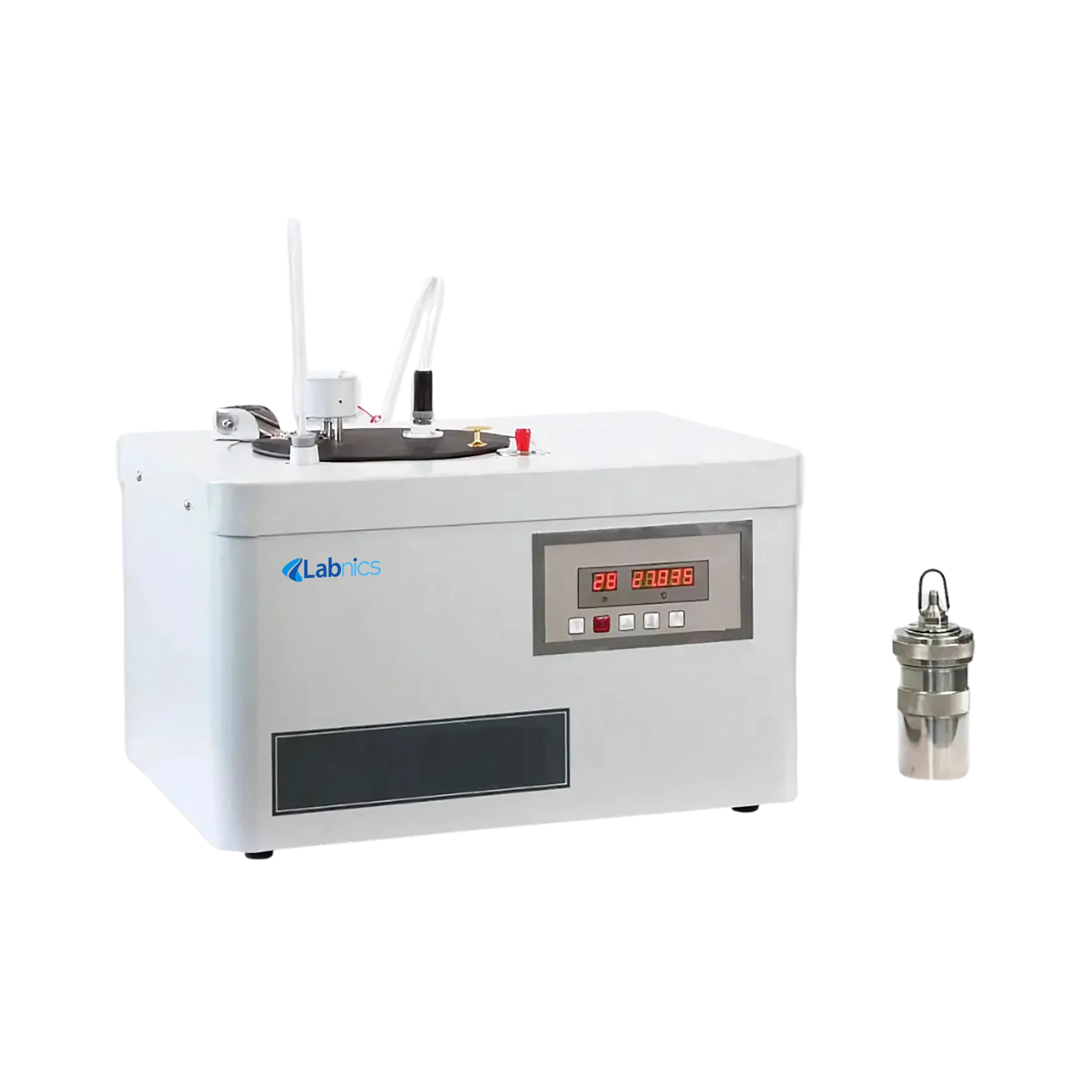
Oxygen Bomb Calorimeter NOBC-100 is designed for accurate analysis of fuel energy values to ensure testing consistency. It is suitable for research institutions, industrial labs, and energy evaluation centers.
FAQ for Oxygen Bomb Calorimeter NOBC-100
1: What is the measurement capability of Oxygen Bomb Calorimeter NOBC-100?
Oxygen Bomb Calorimeter NOBC-100 offers high-resolution measurement and precise detection of calorific values for accurate energy analysis.
2: Is Labnics Oxygen Bomb Calorimeter NOBC-100 suitable for both liquid and solid fuels?
Yes, Labnics Oxygen Bomb Calorimeter NOBC-100 can evaluate calorific values of diesel, paraffin, coal, and similar combustible materials.
3: How many results can Oxygen Bomb Calorimeter NOBC-100 store?
Oxygen Bomb Calorimeter NOBC-100 has a built-in memory system that stores up to 31 results for test tracking and review.
4: What safety measures are built into Oxygen Bomb Calorimeter NOBC-100?
Our Oxygen Bomb Calorimeter NOBC-100 features a sealed combustion chamber and pressure-tested components to ensure safe operation during testing.
5: What interface or control system is used in Oxygen Bomb Calorimeter NOBC-100?
Oxygen Bomb Calorimeter NOBC-100 is equipped with an intuitive control panel that simplifies operations and improves user interaction during testing.
6: What are Oxygen Bomb Calorimeters used for?
Oxygen Bomb Calorimeters are used for measuring the heat of combustion in various materials to determine their energy content accurately.
7: Labnics Oxygen Bomb Calorimeters ensure safe and consistent testing?
Labnics Oxygen Bomb Calorimeters include sealed combustion chambers and temperature-controlled environments to maintain testing reliability and safety.
8: How do Oxygen Bomb Calorimeters improve efficiency in testing?
Our Oxygen Bomb Calorimeters feature automated functions and built-in diagnostics, which streamline the testing process and reduce manual steps.
9: What materials can be analyzed using Oxygen Bomb Calorimeters?
Oxygen Bomb Calorimeters can analyze a wide range of solid and liquid combustibles, including fuels, biomass, food samples, and chemical substances.