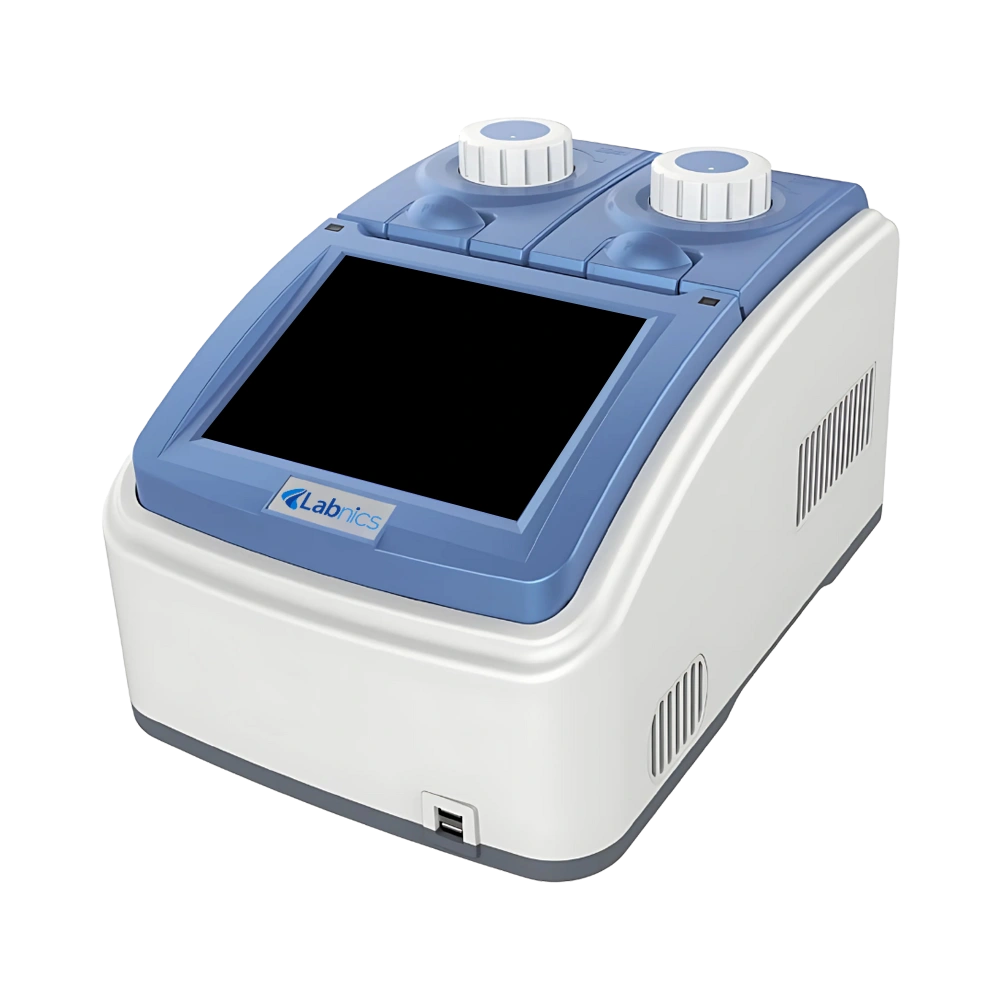
Dual Block Thermal Cycler NDBTC-101 is used for precise DNA amplification and PCR experiments with secure data management. It is applied in research laboratories, clinical diagnostics, and molecular biology facilities.
FAQ for Dual Block Thermal Cycler NDBTC-101
1: Can different PCR programs run at the same time?
Two different PCR programs can run simultaneously thanks to the dual-block independent control. This feature enhances efficiency and allows direct comparison between protocols in a single run.
2: Is remote monitoring and control possible?
The Dual Block Thermal Cycler can be managed and monitored remotely via a mobile app or PC software using the built-in Wi-Fi. This enables convenient experiment oversight without being physically present in the lab.
3: How does the Dual Block Thermal Cycler NDBTC-101 prevent sample evaporation?
An adjustable hot lid with pressure protection accommodates various tube heights and prevents evaporation or tube melting. This design helps maintain sample integrity throughout the run.
4: How can the anodized aluminum heating module be maintained?
The module surface should be gently wiped with a clean, soft cloth after use to remove any residue. Abrasive cleaners or sharp tools should be avoided to prevent scratches and preserve heat conduction efficiency.
5: How should the Dual Block Thermal Cycler NDBTC-101 be stored when not in use for long periods?
The thermal cycler should be covered to protect it from dust, disconnected from the power supply, and stored in a cool, dry location. This practice preserves both the electronics and mechanical components.
6: Does the Multi-Block Thermal Cycler support remote monitoring or data management?
Our Multi-Block Thermal Cyclers offer data storage options and connectivity through USB or network interfaces. This allows easy backup of protocols and remote monitoring for convenient experiment management.
7: Is the Multi-Block Thermal Cycler compatible with standard PCR consumables?
Yes, our Multi-Block Thermal Cycler supports commonly used tubes, strips, and microplates, ensuring compatibility with most existing laboratory supplies. This avoids the need for specialized consumables and reduces overall costs.
8: What maintenance is required for the Multi-Block Thermal Cycler?
Routine maintenance includes cleaning the blocks and ensuring the lid seals properly. Periodic calibration and software updates help maintain accuracy and performance over time.
9: How energy efficient is the Multi-Block Thermal Cycler?
Our Multi-Block Thermal Cyclers feature energy-saving modes that reduce power consumption during idle periods without affecting performance. This helps lower operating costs in busy laboratories.