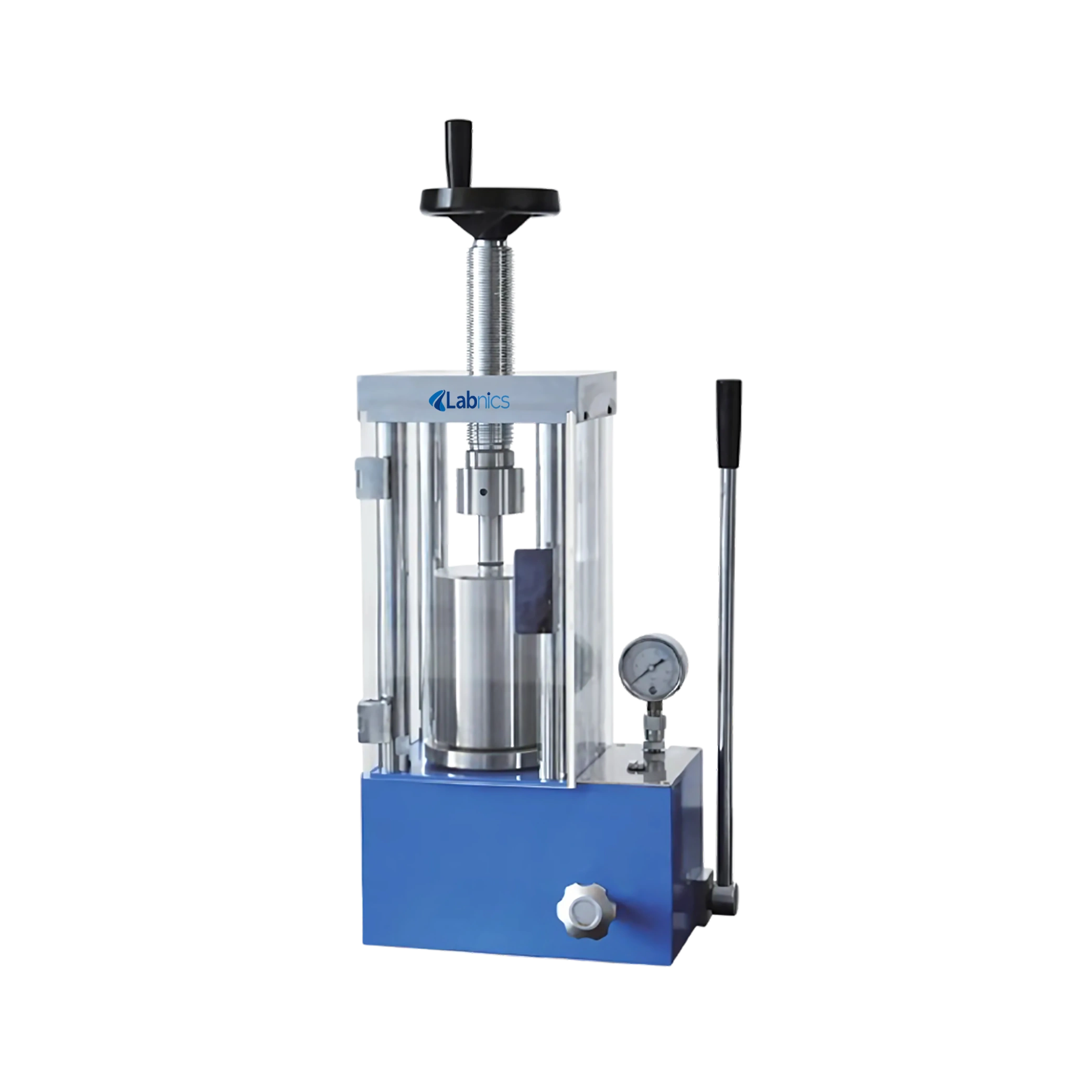
Manual CIP Press NMCIP-100 is used to compact powdered materials uniformly under high pressure without the use of heat. It is commonly used in research laboratories, ceramic processing units, and material science facilities.
FAQ for Manual CIP Press NMCIP-100
1: How does the Manual CIP Press NMCIP-100 operate?
Manual CIP Press NMCIP-100 operates through a hand-driven hydraulic pump to apply isostatic pressure to the sample chamber.
2: Is electricity required to use Manual CIP Press NMCIP-100?
No, Manual CIP Press NMCIP-100 operates manually and does not require electricity, making it suitable for power-restricted labs.
3: Can Manual CIP Press NMCIP-100 handle different mold sizes?
Yes, Manual CIP Press NMCIP-100 supports multiple mold sizes for flexibility in sample dimensions.
4: What type of materials can be processed using Manual CIP Press NMCIP-100?
Manual CIP Press NMCIP-100 is suitable for ceramics, metal powders, minerals, and other laboratory powders.
5: Is Manual CIP Press NMCIP-100 portable?
Yes, Manual CIP Press NMCIP-100 has a compact design, making it portable and easy to use in various lab setups.
6: How does the Manual CIP Press work?
Manual CIP Press works by manually pumping a hydraulic handle that applies isostatic pressure through a fluid medium to compress the sample
7: What type of samples can be pressed using Manual CIP Press?
It is ideal for ceramics, powders, minerals, and other laboratory materials needing uniform compaction.
8: Is electricity required to operate a manual CIP press?
No, a manual CIP press is fully functional without electricity, making it suitable for remote or power-restricted environments.
9: What are the main advantages of using a Manual CIP Press?
Manual CIP Press offers full control, portability, no power dependency, and lower maintenance costs.