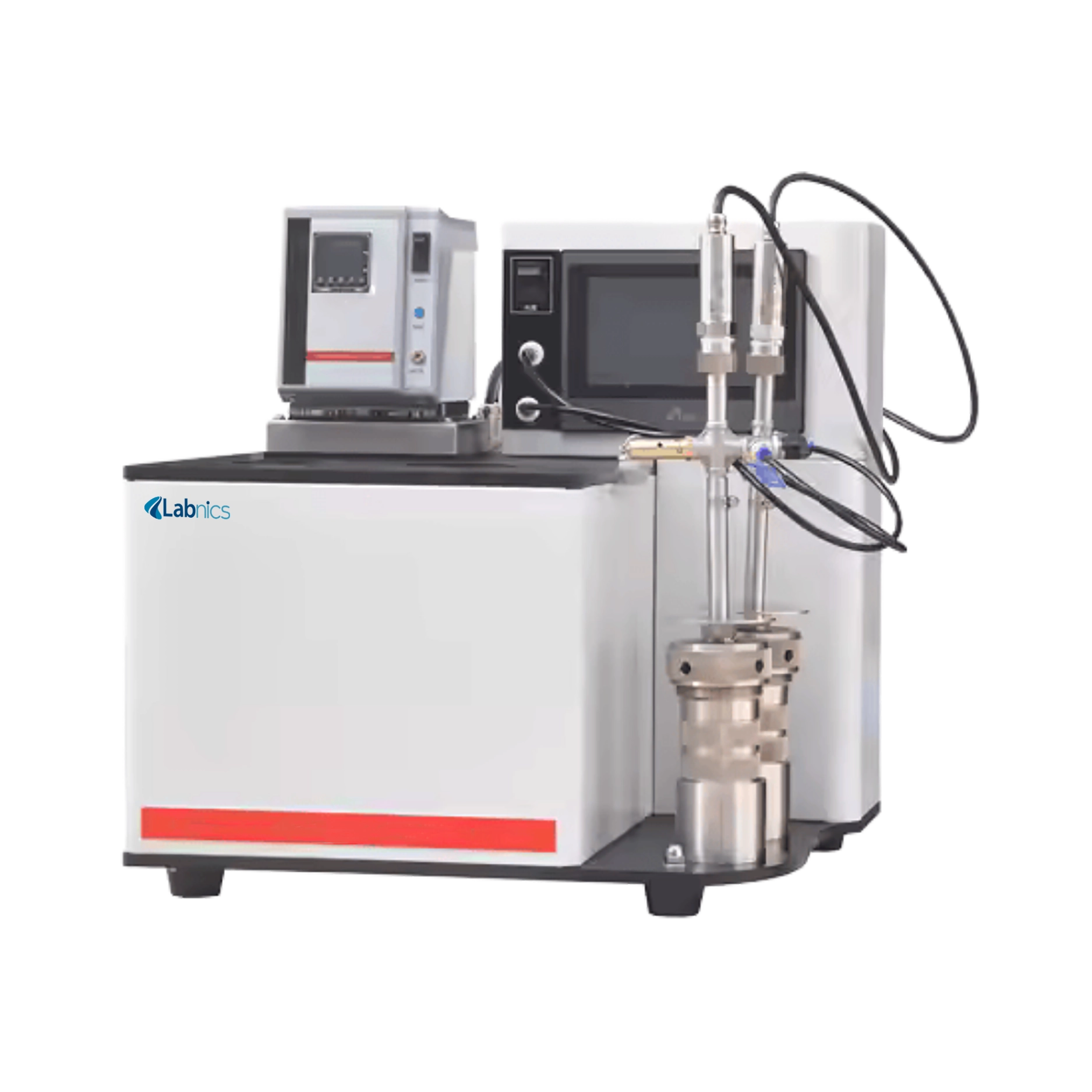
Gasoline Oxidation Stability Tester NGOS-100 is used in petroleum refineries, fuel research labs, and quality control departments to assess the oxidation stability of gasoline.
FAQ for Gasoline Oxidation Stability Tester NGOS-100
1: What safety mechanisms are built into the Gasoline Oxidation Stability Tester NGOS-100?
The Gasoline Oxidation Stability Tester NGOS-100 includes automatic leak detection and a fault alarm system to enhance user safety and reduce manual monitoring during operation.
2: How user-friendly is the Gasoline Oxidation Stability Tester NGOS-100 for daily lab operations?
Our Gasoline Oxidation Stability Tester NGOS-100 features a large hyperbolic touch screen and a window-based interface, allowing for intuitive operation, real-time monitoring, and simplified control.
3: What should be done if the Gasoline Oxidation Stability Tester NGOS-100 displays an error or fault alarm?
If the Gasoline Oxidation Stability Tester NGOS-100 shows a fault alarm, users should check for proper sample placement, secure oxygen connections, and verify that the temperature settings are within the required range. The system provides clear error codes for guidance.
4: Does the Gasoline Oxidation Stability Tester NGOS-100 require manual stirring during testing?
No, the Gasoline Oxidation Stability Tester NGOS-100 uses an electric stirring mechanism, ensuring consistent agitation without the need for manual effort, which enhances both safety and test reliability.
5: How can users maintain the Gasoline Oxidation Stability Tester NGOS-100 for long-term use?
To ensure durability, users should clean the bath regularly, inspect stainless steel fittings, and calibrate sensors periodically. These practices help maintain the performance and longevity of the Gasoline Oxidation Stability Tester NGOS-100.