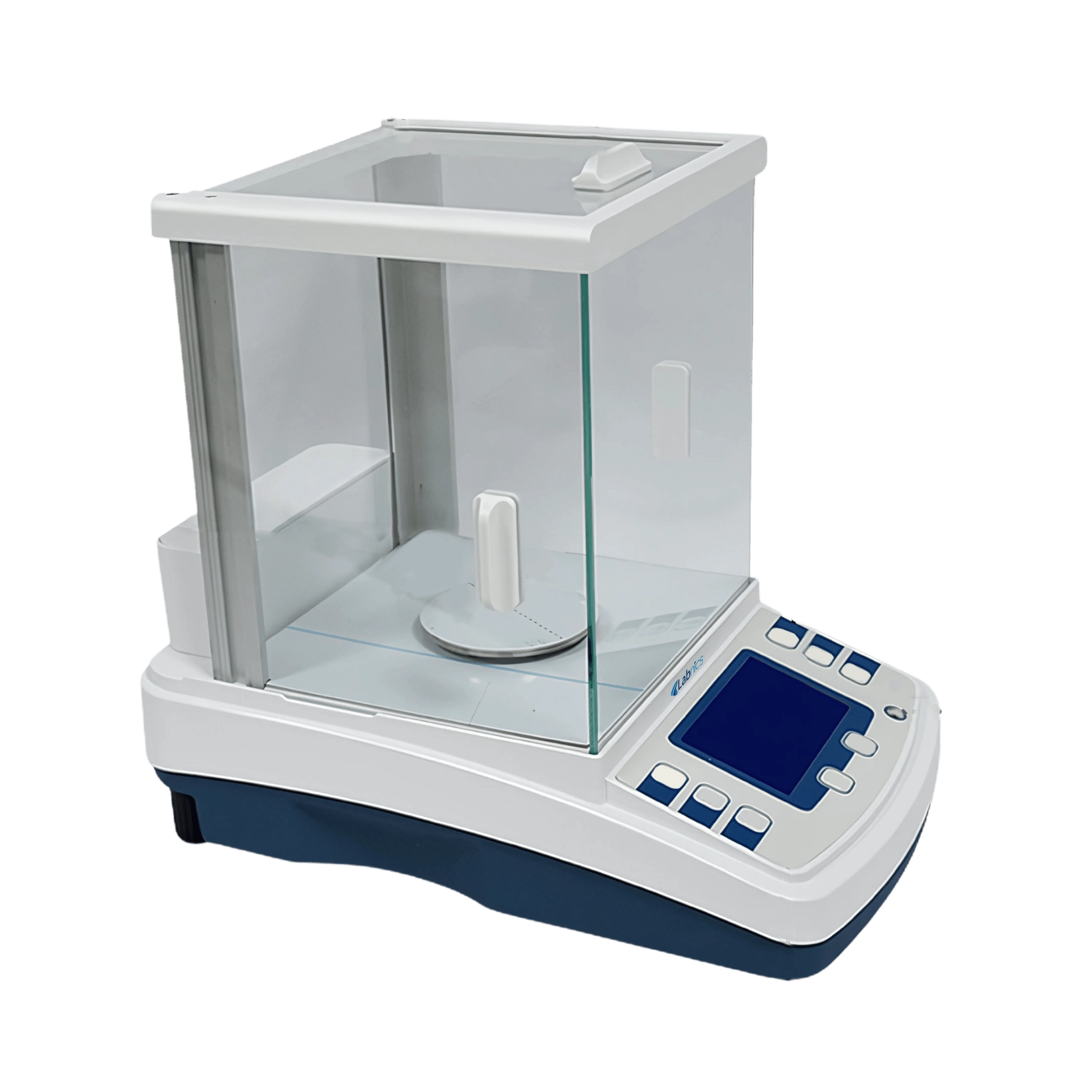
Analytical Balance NAB-502 is suitable for laboratories, research, pharmaceuticals, manufacturing, and quality control, ensuring precise measurements and efficient sample analysis.
FAQ for Analytical Balance NAB-502
1: How does the internal calibration benefit the user?
Internal calibration ensures consistent accuracy by allowing the balance to calibrate itself automatically. This reduces human error and eliminates the need for external weights, saving time during routine lab work.
2: How does the 4-level shockproof design enhance performance?
The multi-level shockproof design minimizes external vibration impact, ensuring accurate measurements while protecting sensitive internal components for long-term durability.
3: What is the function of the electromagnetic sensor in this balance?
The electromagnetic balance sensor delivers high sensitivity and repeatability by detecting even the slightest changes in force, making it suitable for demanding precision-based tasks.
4: What steps should I follow if the balance shows unstable readings?
Ensure the unit is placed on a level, vibration-free surface. Close the windshield during weighing and avoid sudden sample placement or movement.
5: What kinds of safety mechanisms are included in this model?
The analytical balance NAB-502 features overload protection, which helps safeguard internal systems from damage due to excessive loading, maintaining performance and extending device life.
6: What kind of maintenance does the analytical balance require?
Clean the weighing pan and draft shield regularly, avoid exposure to dust and chemicals, and perform routine internal calibration verification to ensure continued measurement accuracy.
7: Why does the Analytical Balance have a glass shield?
The transparent glass shield is designed to block external air drafts and dust. This ensures consistent weighing conditions and prevents fluctuation in readings. It helps protect both the sample and the measurement integrity.
8: Is the Analytical Balance easy to calibrate?
Most analytical balances include internal or external calibration options. Internal calibration is automatic and ensures precision without manual effort. External calibration allows the use of certified weights to validate accuracy regularly.
9: How durable is an Analytical Balance?
Analytical balances are designed with sturdy materials and a sealed weighing chamber. This makes them durable and resistant to environmental contamination. Proper handling and regular maintenance extend their lifespan.
10: How often should an Analytical Balance be cleaned?
Cleaning should be done regularly, ideally after each use. This prevents dust, residue, or chemical spills from affecting accuracy. Use a soft brush or lint-free cloth and avoid harsh chemicals that may damage internal components.