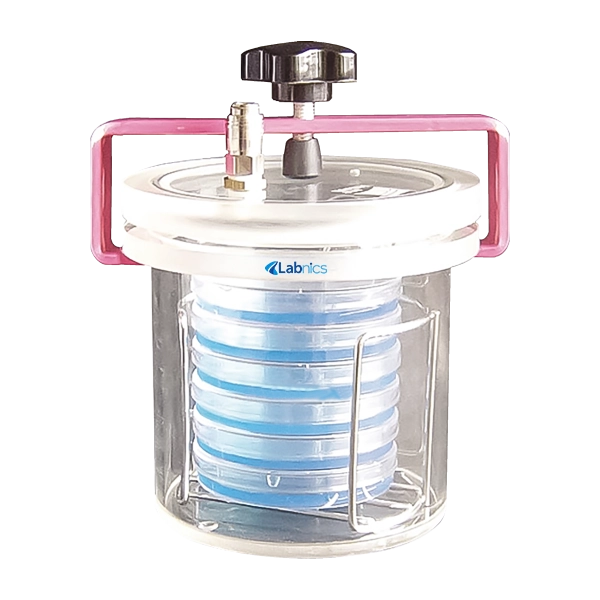
It is widely used to perform anaerobiosis experiment in clinical and microbiological laboratories as well as research institutes.
FAQ for Anaerobic Jar System NAJS-103
1: Is the Anaerobic Jar System NAJS-103 suitable for small-scale laboratories?
Yes, the compact and cost-effective design of the Anaerobic Jar System NAJS-103 makes it an excellent choice for laboratories with a low sample load. It offers efficient anaerobic cultivation without requiring large or complex setups.
2: What should I check if the Anaerobic Jar System NAJS-103 shows signs of leakage?
If leakage is detected in the Anaerobic Jar System NAJS-103, inspect the O-ring for proper placement or signs of damage, ensure the lid is tightly sealed, and confirm that the stainless steel clamp is securely locked. Replacing worn or faulty parts helps maintain the system’s airtight integrity and ensures reliable anaerobic conditions.
3: Which microorganisms can be cultured using the Anaerobic Jar System NAJS-103?
The Anaerobic Jar System NAJS-103 is suitable for cultivating anaerobes, microaerophiles, and capnophiles. It is commonly used in clinical, microbiological, and research laboratories where strict oxygen control is required.
4: What safety precautions should be followed when using the Anaerobic Jar System NAJS-103?
When using the Anaerobic Jar System NAJS-103, always check that the sealing components are properly aligned, avoid over-tightening the clamp, and handle the transparent PMMA structure with care to prevent impact damage.
5: Can samples be monitored visually in the Anaerobic Jar System NAJS-103 during incubation?
Yes, the Anaerobic Jar System NAJS-103 is equipped with a transparent PMMA jar and lid, allowing clear observation of samples without disrupting the internal anaerobic environment.
6: How does the transparent construction of the Anaerobic Jar System improve usability?
The transparent PMMA body and lid enable clear visual monitoring of cultures throughout the incubation period without requiring the jar to be opened. This feature is especially useful for observing microbial growth while maintaining the anaerobic environment. It helps minimize disruptions, reduces the chance of contamination, and ensures reliable culture results.
7: What should I do if the Anaerobic Jar System fails to create or maintain anaerobic conditions?
Check that the lid is securely clamped and the O-ring is intact and properly positioned. Inspect for any leaks or damage to the jar and lid. Also, ensure the gas generation pack is appropriate for the jar size, correctly activated, and not expired. Proper maintenance and correct assembly are essential for optimal performance.
8: How does the electrostatic-coated lid enhance the durability and performance of the Anaerobic Jar System?
The electrostatic-coated lid provides strong resistance to corrosion and surface wear, enhancing its durability. This ensures the lid remains reliable and maintains a secure seal even after repeated use and cleaning in laboratory conditions.
9: Can the Anaerobic Jar System be used in both clinical laboratories and research institutes?
Yes, the Anaerobic Jar System is commonly used in clinical and microbiological laboratories, as well as research facilities, where precise control of oxygen-free conditions is essential. It provides a reliable and consistent environment for cultivating anaerobic and oxygen-sensitive microorganisms, making it a valuable tool for both routine diagnostics and scientific investigations.