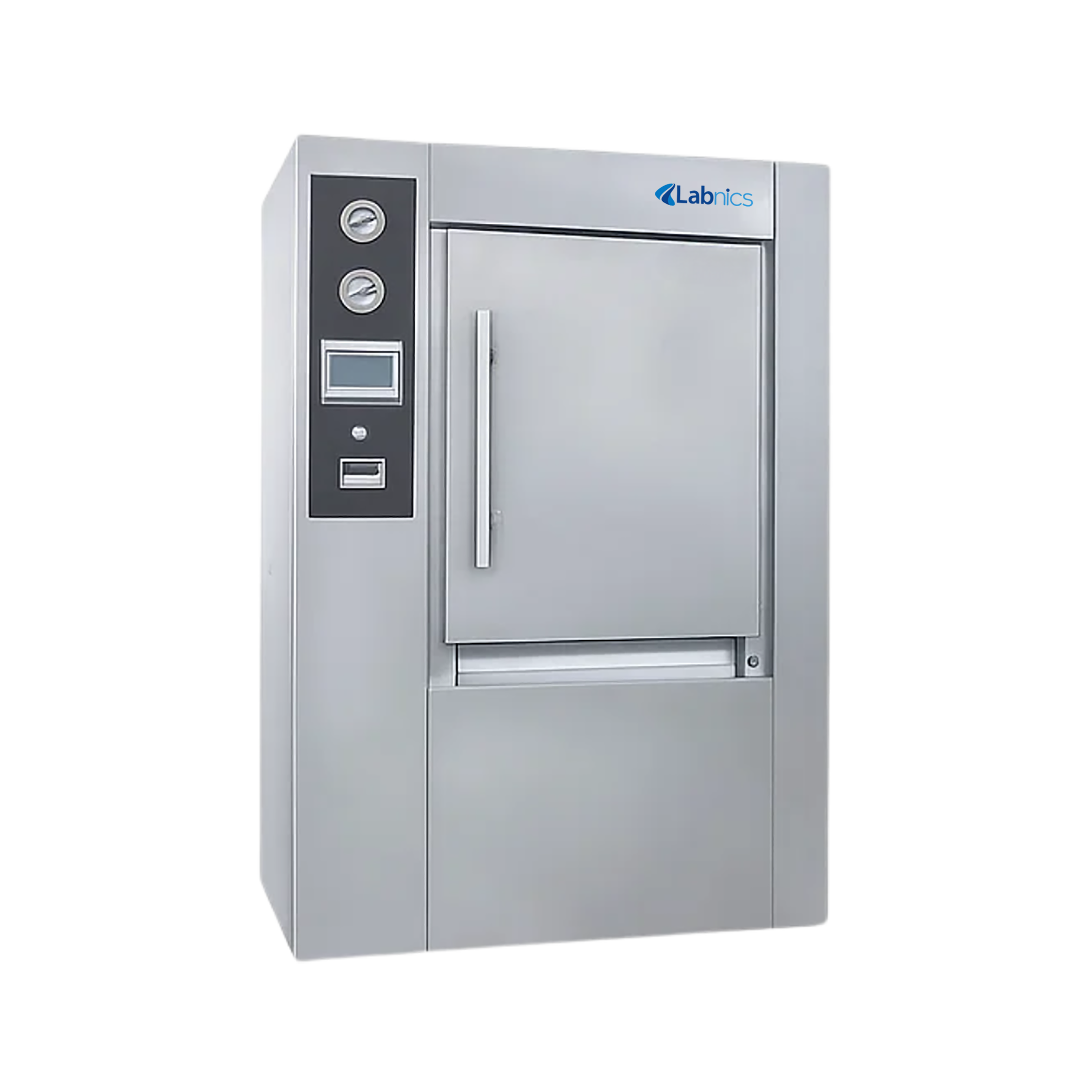
Pulse Vacuum Autoclave NPVA-100 is used for effective sterilization by using steam and pulsating vacuum technology. It is widely used in hospitals, laboratories, pharmaceutical industries, and research centers.
FAQ for Pulse Vacuum Autoclave NPVA-100
1: How is contamination prevented during sterilization?
The inner chamber features an independent steam inlet to avoid contamination from the jacket's carbon steel. Air filters with 2-micron precision ensure 99.97% sterilization efficiency.
2: What kind of safety interlocks are built into the Pulse Vacuum Autoclave NPVA-100?
The Pulse Vacuum Autoclave has a double-door interlock system preventing both doors from opening simultaneously, pressure safety interlocks, and a liquid program temperature door lock. These safeguards protect users and maintain sterilization integrity.
3: What materials are used in the construction of the sealing rings?
The sealing rings are made from a high-quality, high-tear-resistant silicone rubber with a special wear-resistant coating. This ensures a smooth surface, excellent sealing performance, and a service life of up to 1500 cycles.
4: How is the drying process managed in the Pulse Vacuum Autoclave NPVA-100?
After sterilization, the Pulse Vacuum Autoclave uses vacuum dehumidification combined with a jacketed drying system to efficiently dry sterilized items, preventing moisture retention that could compromise sterility.
5: How energy-efficient is the Pulse Vacuum Autoclave NPVA-100?
The Pulse Vacuum Autoclave is designed with water-saving and noise-reducing options that cut vacuum pump water consumption by 30%, reducing operating costs and environmental impact.
6: How does the vacuum function improve sterilization performance?
The vacuum function removes trapped air from the chamber and instruments, allowing steam to reach all surfaces effectively. This ensures uniform sterilization, even for items with intricate designs or internal cavities.
7: Does the Pulse Vacuum Autoclave have safety features during operation?
The Pulse Vacuum Autoclave is equipped with automatic door locking and safety interlocks that prevent the chamber from being opened mid-cycle. These features help maintain safe operation and prevent steam-related accidents.
8: What material is used for the chamber construction?
The chamber is made of high-grade, corrosion-resistant stainless steel that offers durability and easy cleaning. It helps maintain hygiene and withstands high-temperature steam over repeated use.
9: How often should the Pulse Vacuum Autoclave be maintained?
Regular maintenance should be done monthly for basic cleaning and quarterly for more detailed inspections. Preventive servicing helps maintain optimal performance and extends the machine’s lifespan.