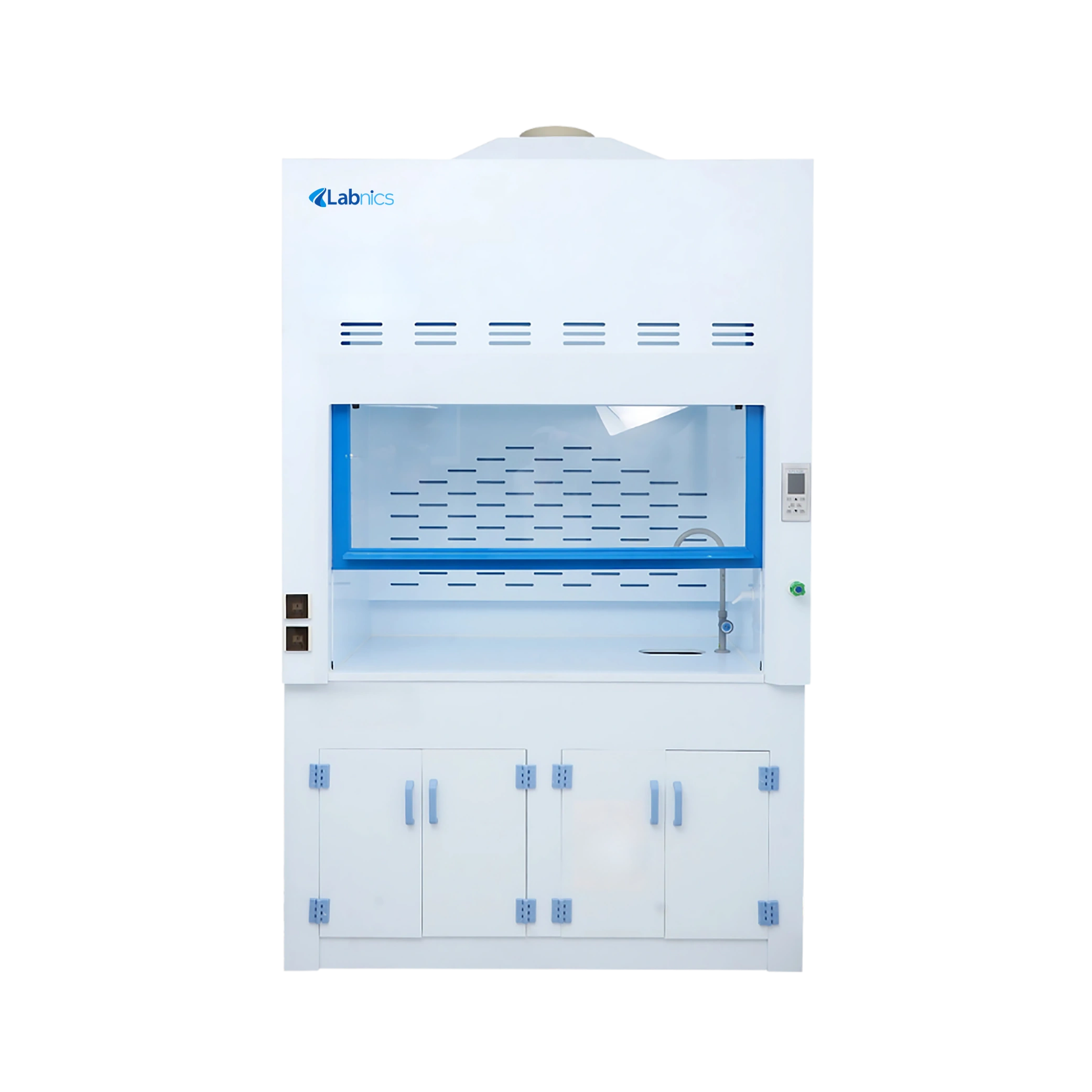
Polypropylene Fume Hood NPFH-101 is used to provide a safe and ventilated workspace for handling corrosive chemicals such as acids and alkalis. It is widely utilized in laboratories and research institutions to ensure operator safety and maintain a contaminant-free environment.
FAQ for Polypropylene Fume Hood NPFH-101
1: What material is the NPFH-101 made of?
The NPFH-101 is constructed using 8–12 mm thick white polypropylene for the body and 5 mm tempered glass for the sash, ensuring durability and exceptional chemical resistance.
2: Does it have digital controls?
Yes, it comes with an intelligent digital control panel that allows easy operation of fan, lighting, power sockets, sterilizer, and damper for improved safety and convenience.
3: Is the sash explosion-proof?
Absolutely. The hood features a 5 mm tempered glass sash that is explosion-proof, providing both visibility and maximum operator protection during chemical handling.
4: Can it handle corrosive substances?
Yes, its polypropylene construction makes it ideal for handling strong acids, alkalis, and other corrosive chemicals without damage, ensuring long-term durability.
5: Where is this fume hood commonly used?
It is widely used in chemical laboratories, pharmaceutical facilities, academic research labs, and industrial testing environments where corrosive chemical handling is required.
6: What is a Polypropylene Fume Hood?
It’s a chemical-resistant enclosure used to ventilate hazardous fumes during laboratory processes.
7: Why choose polypropylene for fume hoods?
Polypropylene is highly resistant to corrosive chemicals, making it ideal for harsh laboratory environments.
8: Can it handle all types of chemicals?
It is specifically suited for acids, alkalis, and corrosive substances, but not recommended for flammable solvents.
9: How do Polypropylene Fume Hoods improve safety?
They prevent direct exposure to harmful vapors and ensure safe airflow in the lab.