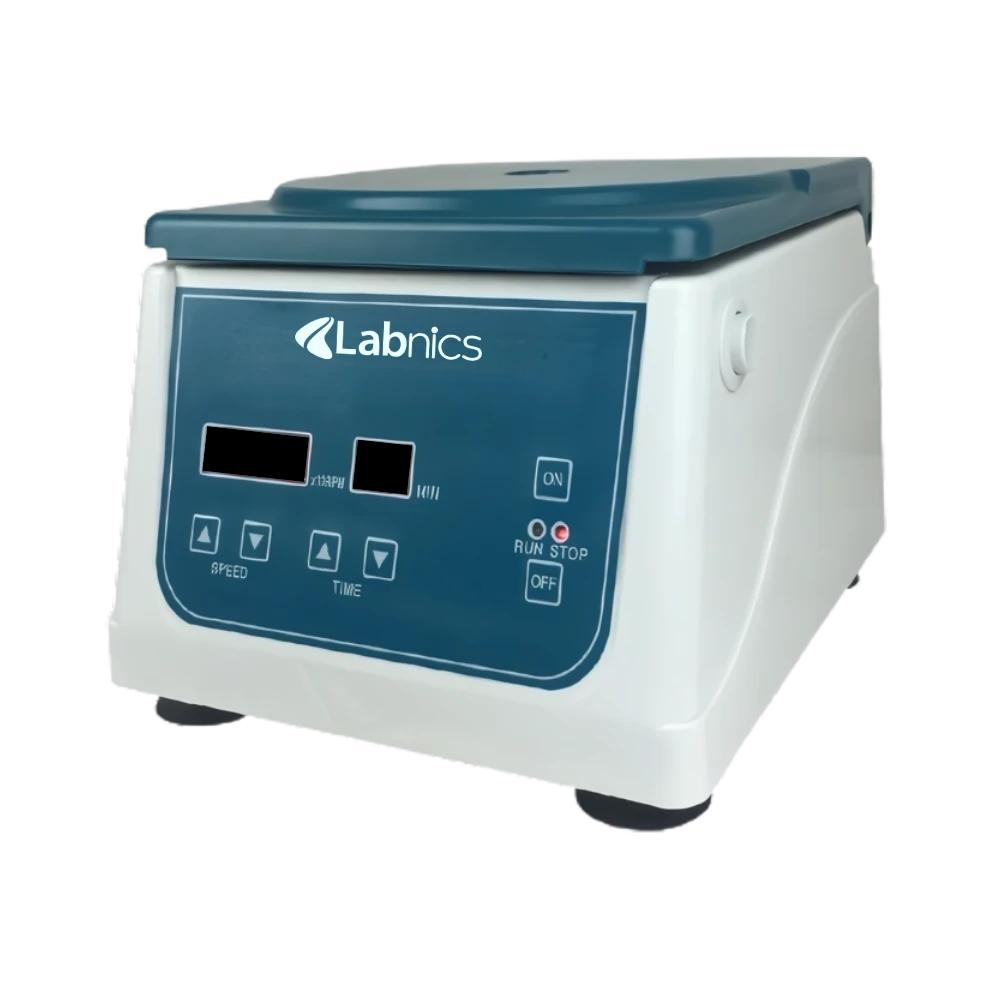
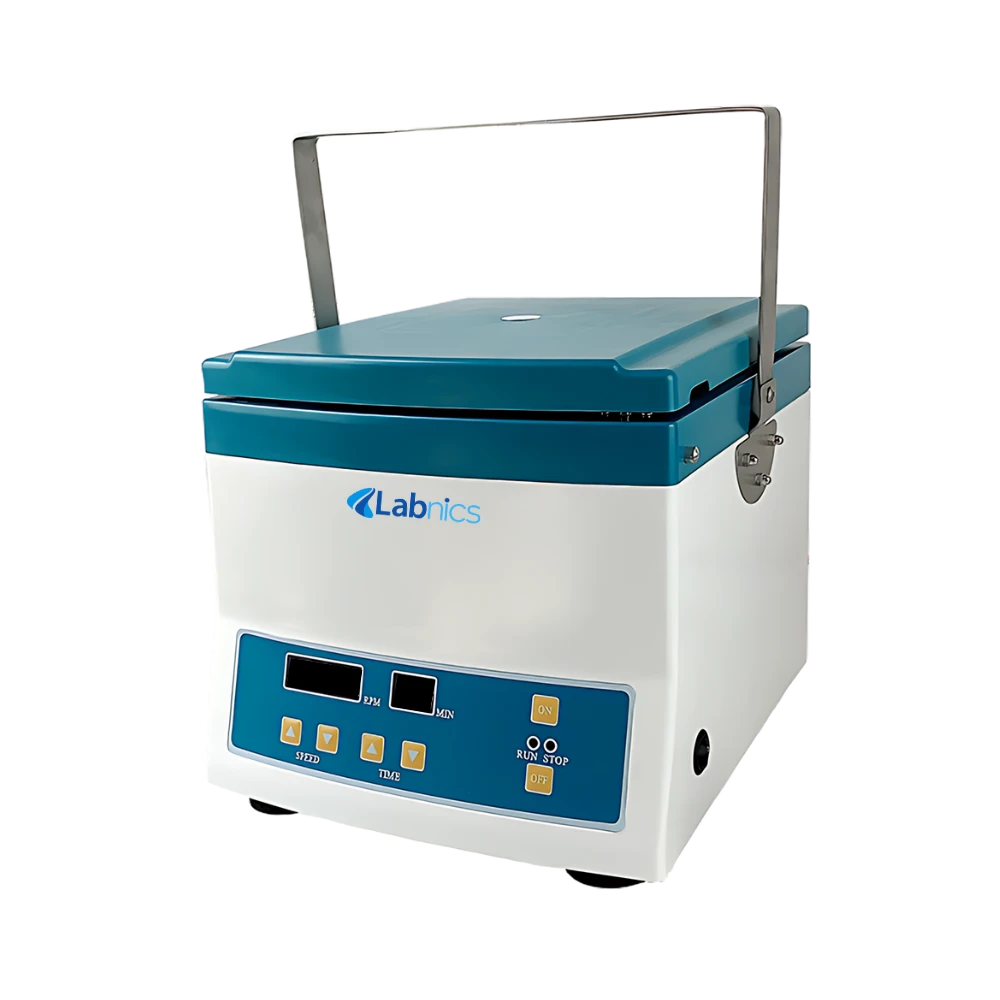
Low speed Mini Centrifuge NLSMC-100 is operating at a maximum speed of 4,000 RPM (≈2,325 × g) using a 12 V power input. Built-in safety features include a mechanical lid-lock, automatic imbalance detection, and emergency braking for secure operation. This centrifuge is ideal for field diagnostics such as blood separation in ambulances and outdoor clinics. It also excels in agricultural and environmental testing.
Low speed Mini Centrifuge NLSMC-100 is ideal for field diagnostics, including blood separation and rapid serum sampling in ambulances or outdoor clinical tents. It’s ideal for on-site testing in agriculture and environmental monitoring, enabling immediate sample processing without a lab.
FAQ for Low speed Mini Centrifuge NLSMC-100
1: Is the Low Speed Mini Centrifuge NLSMC-100 suitable for classroom or teaching labs?
Yes, due to its compact size, ease of use, and reliable performance, the Low Speed Mini Centrifuge NLSMC-100 is an excellent choice for educational environments. Low Speed Mini Centrifuge NLSMC-100 ideal for demonstrating basic centrifugation techniques in a safe and controlled way.
2: How do I operate the Low Speed Mini Centrifuge NLSMC-100?
Low Speed Mini Centrifuge NLSMC-100 operation is simple. Load the balanced tubes into the rotor, close the lid to begin centrifugation, and open the lid to stop. No programming or advanced settings are needed, making it suitable for both beginners and experienced users.
3: What maintenance does the Low Speed Mini Centrifuge NLSMC-100 require?
Basic maintenance of the Low Speed Mini Centrifuge NLSMC-100 involves keeping the rotor clean and dry, avoiding unbalanced loads, and periodically checking for tube wear or damage. Always unplug the device before cleaning and store it in a dust-free environment when not in use.
4: Can the Low Speed Mini Centrifuge NLSMC-100 be used to briefly pellet DNA or RNA samples?
Yes, the Low Speed Mini Centrifuge NLSMC-100 is suitable for brief spin-downs of nucleic acids, especially for pelleting or collecting samples at the bottom of tubes before or after PCR or extraction steps.
5: Is calibration of Low Speed Mini Centrifuge NLSMC-100 required for accurate results?
Calibration is not typically necessary for fixed-speed mini centrifuges. However, for consistent results, ensure balanced tube loading and avoid long periods of continuous operation.