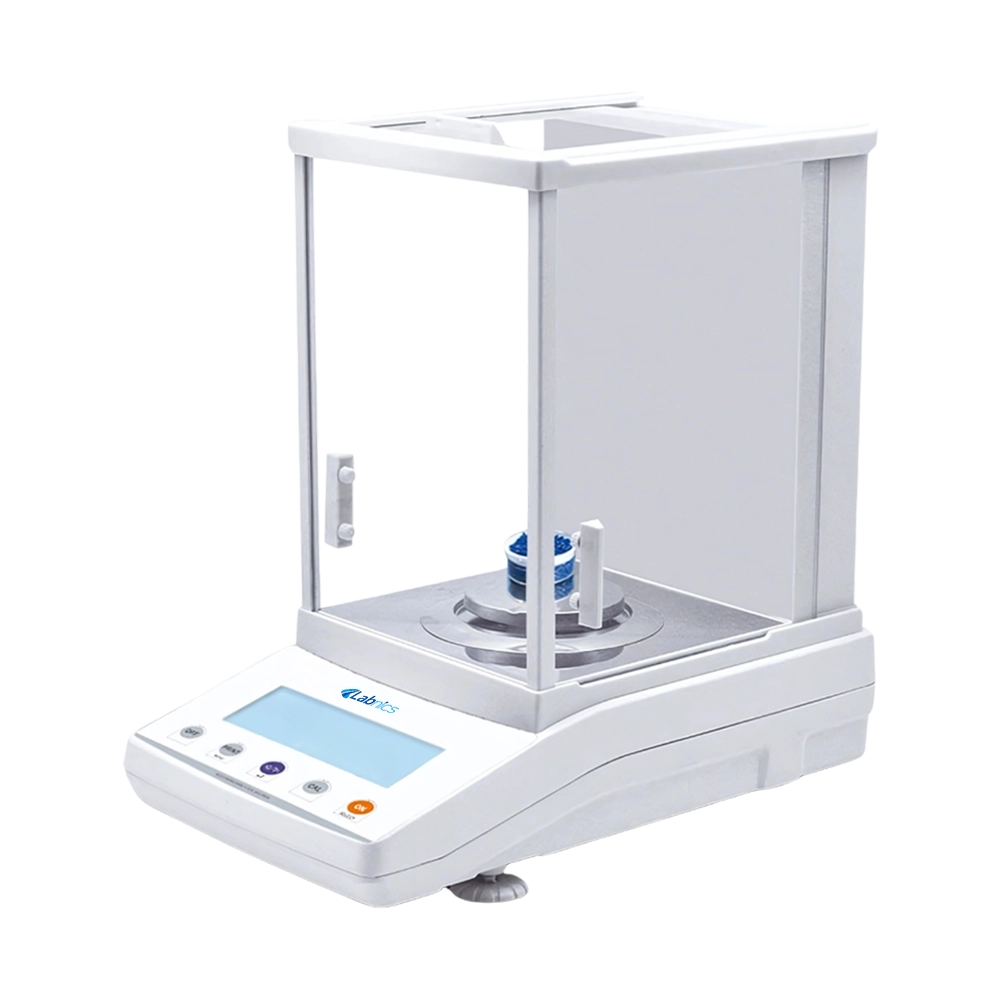
Analytical Balance NAB-311 is used for precise measurements to ensure accuracy in weighing small quantities. It is commonly utilized in laboratories, pharmaceuticals, jewelry, food industries, and manufacturing for quality control, formulation, and product consistency.
FAQ for Analytical Balance NAB-311
1: Why is the 0.001g readability significant for the analytical balance?
The Analytical Balance offers 0.001g readability to provide highly precise measurements, essential for applications requiring exact sample weights such as pharmaceuticals and laboratory research.
2: What is the benefit of having both internal and external calibration options?
It uses both internal and external calibration to ensure continuous accuracy. The internal calibration adjusts automatically for environmental changes, while the external 200g calibration weight allows for manual verification and enhanced precision.
3: How does the adjustable sensitivity and speed setting enhance performance?
Analytical Balance NAB-311 features adjustable sensitivity and speed, enabling users to optimize performance depending on sample type and environmental conditions, which helps improve measurement stability and accuracy.
4: Can the NAB-311 be connected to external devices like computers or printers?
The Analytical Balance includes a standard RS232 interface and an optional USB port, facilitating seamless connection to printers or computers for efficient data transfer and record-keeping.
5: What safety features does the NAB-311 have?
The balance is equipped with overload and fault alarms that alert users to prevent damage by indicating when the maximum capacity is exceeded.
6: How do I maintain the accuracy of this balance?
The Analytical Balance should be regularly calibrated using its internal system and verified with the external 200g weight. It is important to keep it clean and operated within the specified temperature range of 15 to 35°C.
7: Why does the Analytical Balance have a glass shield?
The transparent glass shield is designed to block external air drafts and dust. This ensures consistent weighing conditions and prevents fluctuation in readings. It helps protect both the sample and the measurement integrity.
8: Is the Analytical Balance easy to calibrate?
Most analytical balances include internal or external calibration options. Internal calibration is automatic and ensures precision without manual effort. External calibration allows the use of certified weights to validate accuracy regularly.
9: How durable is an Analytical Balance?
Analytical balances are designed with sturdy materials and a sealed weighing chamber. This makes them durable and resistant to environmental contamination. Proper handling and regular maintenance extend their lifespan.
10: How often should an Analytical Balance be cleaned?
Cleaning should be done regularly, ideally after each use. This prevents dust, residue, or chemical spills from affecting accuracy. Use a soft brush or lint-free cloth and avoid harsh chemicals that may damage internal components.