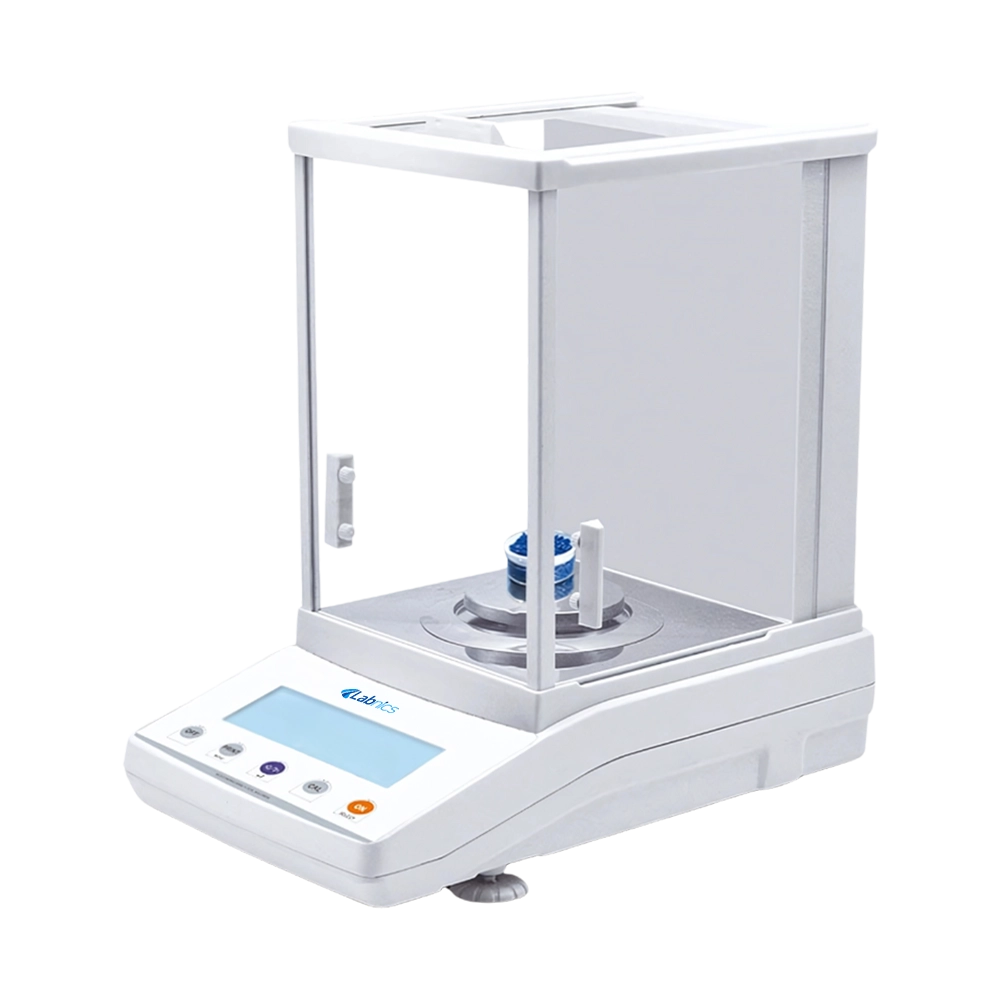
Analytical Balance NAB-300 is widely used in the chemical, food processing, environmental testing, and forensic industries, where precise measurements are essential for product formulation, quality assurance, and research.
FAQ for Analytical Balance NAB-300
1: How does the large windproof cover improve measurement accuracy?
The analytical balance NAB-300 features a sizable draft shield that protects the weighing pan from air currents and dust, minimizing fluctuations in sensitive readings and ensuring stable, consistent results.
2: What is the purpose of external calibration, and how do I perform it?
Our analytical balance NAB-300 supports external calibration, allowing you to verify and adjust accuracy using certified calibration weights.
3: How can I maintain and clean the balance to ensure longevity?
Regularly clean the pan and draft shield with a soft, dry cloth. Avoid exposing the balance to harsh chemicals or moisture, and ensure it is placed on a stable, level surface using the built-in level indicator.
4: What safety features protect the balance during operation?
The analytical balance NAB-300 includes overload and fault alarms to prevent damage from misuse, as well as a tare function for efficient sample handling.
5: Can the analytical balance NAB-300 convert between different weight units?
Yes, it supports unit conversion, allowing users to switch between grams, milligrams, and other units depending on their measurement needs.
6: Why does the Analytical Balance have a glass shield?
The transparent glass shield is designed to block external air drafts and dust. This ensures consistent weighing conditions and prevents fluctuation in readings. It helps protect both the sample and the measurement integrity.
7: Is the Analytical Balance easy to calibrate?
Most analytical balances include internal or external calibration options. Internal calibration is automatic and ensures precision without manual effort. External calibration allows the use of certified weights to validate accuracy regularly.
8: How durable is an Analytical Balance?
Analytical balances are designed with sturdy materials and a sealed weighing chamber. This makes them durable and resistant to environmental contamination. Proper handling and regular maintenance extend their lifespan.
9: How often should an Analytical Balance be cleaned?
Cleaning should be done regularly, ideally after each use. This prevents dust, residue, or chemical spills from affecting accuracy. Use a soft brush or lint-free cloth and avoid harsh chemicals that may damage internal components.