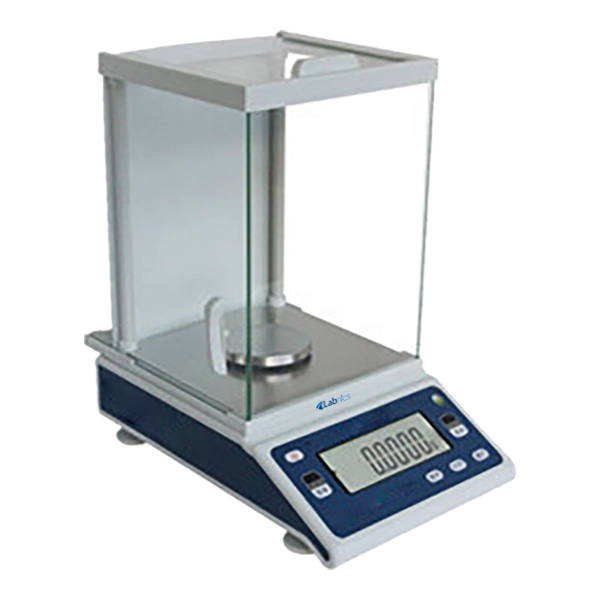
It is widely used for weighing of samples, precipitates or biological specimens of relatively smaller quantities. It is useful in areas like Organic and analytical chemistry labs, Preparatory labs of Biotechnology, Microbiology, Forensic sciences, Bioanalytical and Nutraceutical testing laboratories, and Bioorganic divisions etc.
FAQ for Analytical Balance NAB-105
1: How does the automatic error correction feature improve measurement accuracy?
This function compensates for minor environmental disturbances, such as vibrations or air drafts, helping to stabilize the reading automatically for consistent results.
2: What should I do if the displayed weight fluctuates?
Ensure the balance is on a stable, vibration-free surface away from drafts or temperature changes. If fluctuations continue, recalibrate using the supplied F1-class calibration weight.
3: How do I extend the balance’s lifespan?
Regularly clean the weighing pan, avoid overloading, store the balance in a dry environment, and perform routine calibrations. Always handle the balance with care to prevent internal damage.
4: What safety features help protect the balance from damage?
The balance includes overload protection, zero tracking, and a sealed design to prevent corrosion. These features help protect both the device and user from common operational risks.
5: Is calibration equipment included with the analytical balance NAB-105?
Yes, the balance comes with a certified 200 g F1 class calibration weight, allowing users to perform accurate recalibrations as needed.
6: Why does the Analytical Balance have a glass shield?
The transparent glass shield is designed to block external air drafts and dust. This ensures consistent weighing conditions and prevents fluctuation in readings. It helps protect both the sample and the measurement integrity.
7: Is the Analytical Balance easy to calibrate?
Most analytical balances include internal or external calibration options. Internal calibration is automatic and ensures precision without manual effort. External calibration allows the use of certified weights to validate accuracy regularly.
8: How durable is an Analytical Balance?
Analytical balances are designed with sturdy materials and a sealed weighing chamber. This makes them durable and resistant to environmental contamination. Proper handling and regular maintenance extend their lifespan.
9: How often should an Analytical Balance be cleaned?
Cleaning should be done regularly, ideally after each use. This prevents dust, residue, or chemical spills from affecting accuracy. Use a soft brush or lint-free cloth and avoid harsh chemicals that may damage internal components.