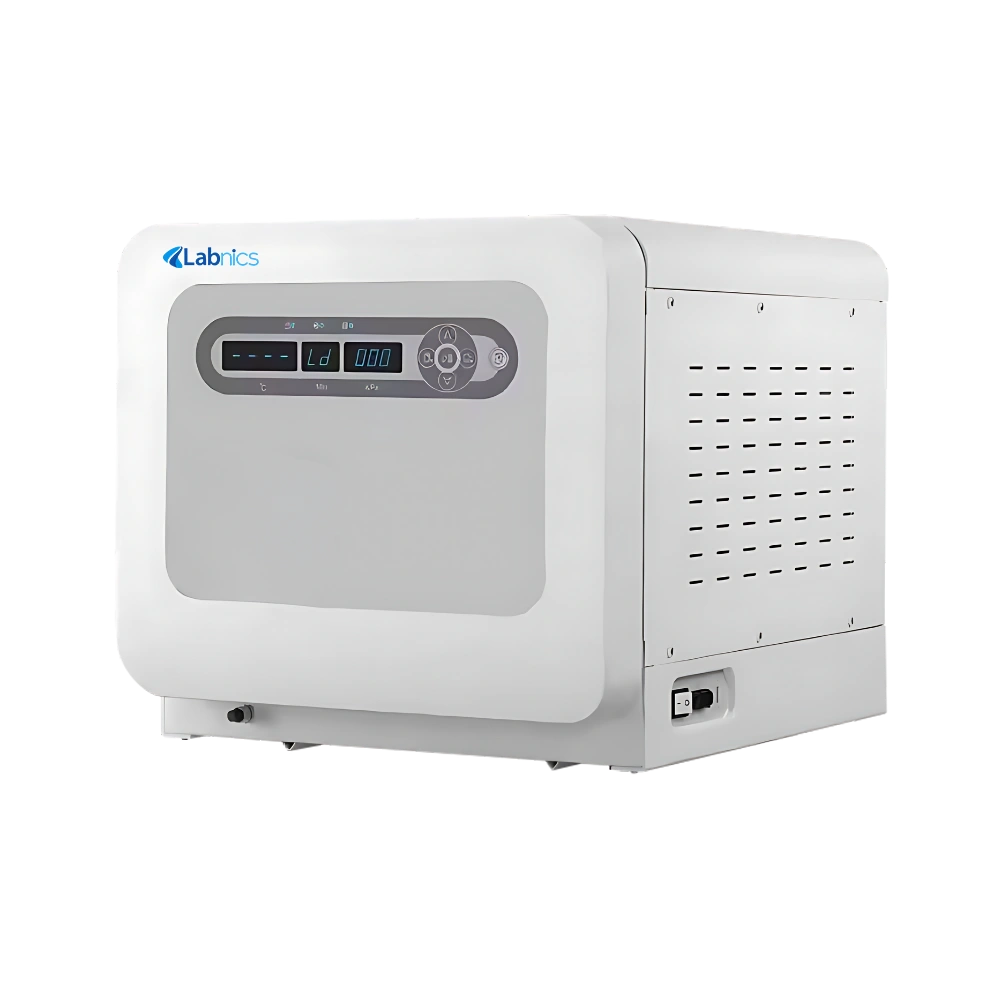
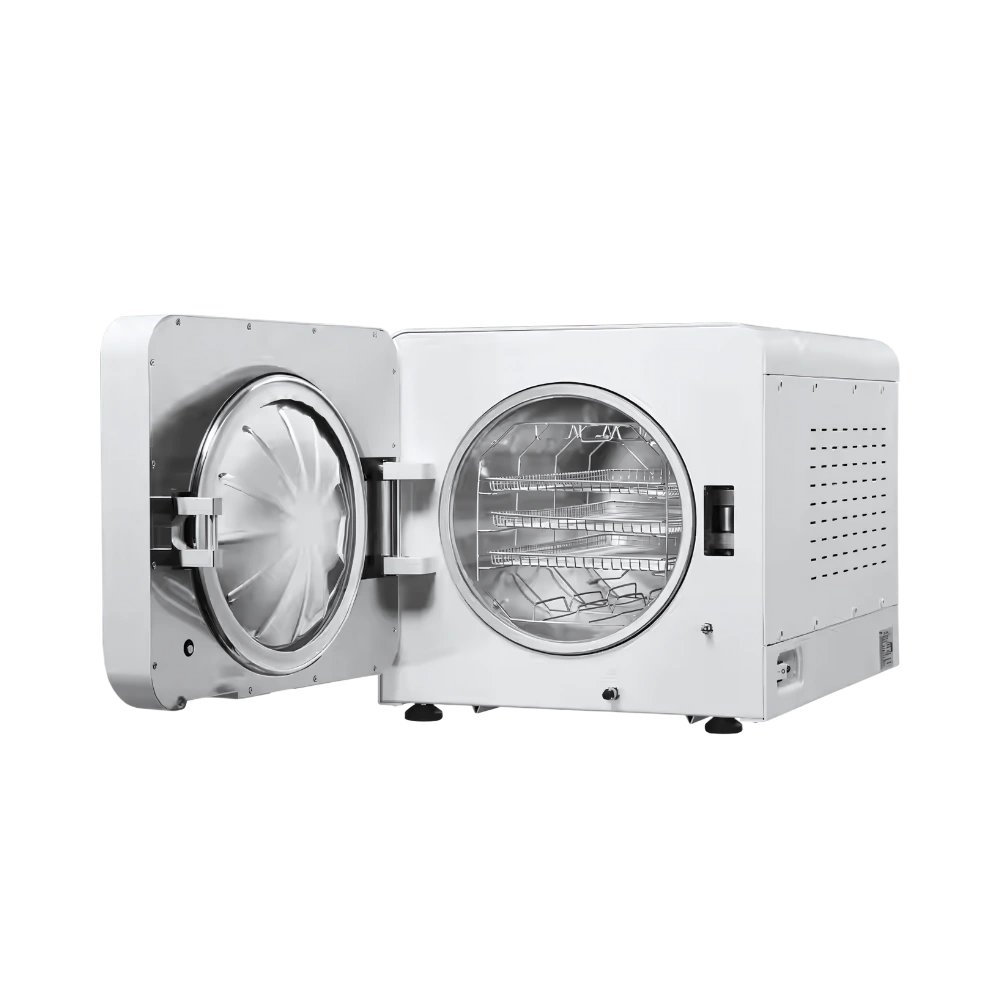
FAQ for Dental autoclave NDLA-100
1: What is Dental autoclave NDLA-100 and how does it function?
Dental autoclave NDLA-100 is a steam sterilizer that uses high-pressure saturated steam typically 121–134?°C to eliminate all bacteria, viruses, fungi, and spores from dental instruments. It operates by removing air, pressurizing with steam, holding at sterilization temperature, then drying before safe unloading.
2: How long does Dental autoclave NDLA-100 cycle take?
Dental autoclave NDLA-100 usually requires just 3–10 minutes at higher temperatures (132–135?°C), with total cycles around 45 minutes.
3: How should instruments be prepared and loaded to Dental autoclave NDLA-100?
Instruments must be thoroughly cleaned, dried, and placed in steam-permeable pouches or trays. Overloading restricts steam circulation, instruments should be evenly distributed and avoid stacking to ensure full sterilization
4: What maintenance is required to keep it working properly?
Daily tasks include cleaning the chamber and wiping gaskets; weekly, drain and refill the water tank; and quarterly/annual checks involve gasket inspection, calibration, and biological testing. Using distilled water and following a maintenance schedule prevents mineral buildup and ensures compliance.
5: What safety mechanisms are built into dental autoclaves?
Dental autoclaves include features like safety interlocks to prevent door opening under pressure, pressure relief valves to manage overpressure, and automatic steam-flush air removal to ensure proper sterilization and safe operation.
6: What are dental autoclaves and how do they work?
Dental autoclaves are steam sterilizers that eliminate all microbial life using high-pressure saturated steam at 121–134?°C and 15–30?psi in either gravity-displacement or vacuum Class?B cycles. They ensure thorough sterilization by evacuating air, sterilizing under pressure, and completing a drying phase before depressurization.
7: How long does a full sterilization cycle take?
Dental autoclave cycles usually involve a 15–30-minute sterilization period at 121?°C, followed by a 20–45-minute drying phase. Class?B pre-vacuum cycles complete faster—about 3–10?minutes at 132–135?°C plus total cycle time around 45?minutes.
8: How important is proper maintenance and validation?
Consistent sterilization depends on using distilled water, cleaning reservoirs, inspecting seals, and annual calibration. Daily checks with physical indicators and periodic biological/chemical tests are essential to verify performance and prevent failures.
9: How should instruments be prepared and loaded?
Instruments must be cleaned, completely dried, and placed in steam-permeable pouches or trays without overcrowding to allow proper steam circulation, Make sure they’re completely dry before use.