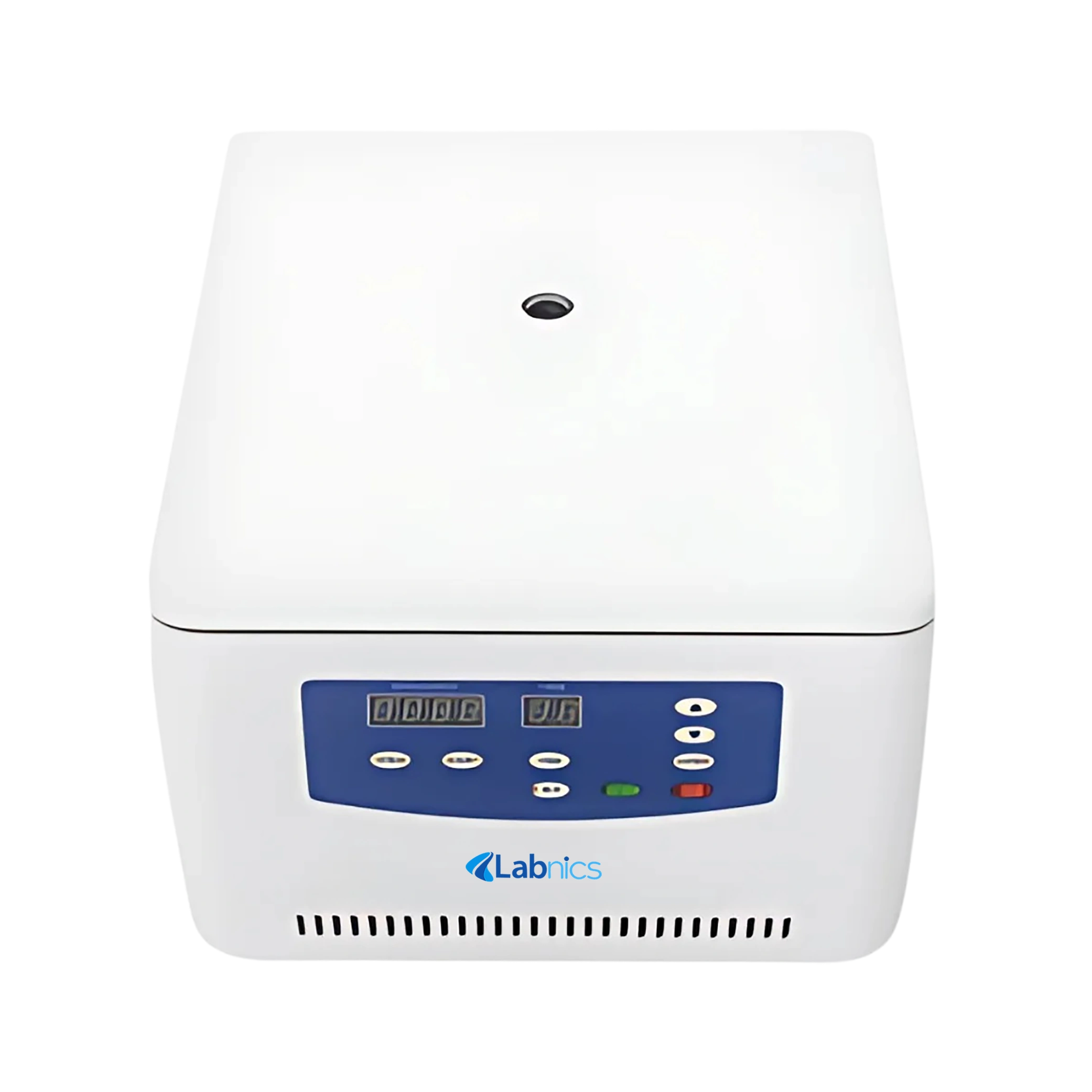
Benchtop Cytocentrifuge NBCC-200 is used for preparing cell samples onto slides for diagnostic or research evaluation. It is widely applied in hospitals, pathology labs, cytology departments, and research institutions handling cellular analysis and diagnostics.
FAQ for Benchtop Cytocentrifuge NBCC-200
1: What is the maximum speed and RCF of the Benchtop Cytocentrifuge NBCC-200?
Benchtop Cytocentrifuge NBCC-200 operates at a maximum speed of 3000 r/min with a relative centrifugal force (RCF) of 890 × g, making it efficient for quick cell preparation without compromising sample integrity.
2: What sample sizes can this Benchtop Cytocentrifuge NBCC-200 handle?
The Benchtop Cytocentrifuge NBCC-200 supports 8 × 0.5 ml and 12 × 2 ml tubes, allowing flexibility for different cytology sample requirements and optimized workflow in both clinical and research settings.
3: Is the Benchtop Cytocentrifuge NBCC-200 noisy during operation?
No, Benchtop Cytocentrifuge NBCC-200 is designed with a brushless motor and precision engineering to maintain noise levels under 60 dB(A), ensuring a quiet working environment in busy laboratories.
4: What safety and stability features does this Benchtop Cytocentrifuge NBCC-200 provide?
Benchtop Cytocentrifuge NBCC-200 is built with a durable housing, stable balancing system, accurate speed regulation (±30 r/min), and a reliable power supply (AC 110 V or 230 V), ensuring both operational safety and consistent results.
5: Where can this Benchtop Cytocentrifuge NBCC-200 be used effectively?
Benchtop Cytocentrifuge NBCC-200 is ideal for hospitals, pathology labs, cytology centers, and research institutions where precise cell deposition onto slides is critical for diagnostic or investigative purposes.
6: What is a benchtop cytocentrifuge used for?
A benchtop cytocentrifuge is used to concentrate and deposit cells from fluids directly onto microscope slides, allowing for efficient cytological analysis and diagnosis.
7: What types of laboratories benefit from using a cytocentrifuge?
Hospitals, pathology labs, cytology departments, and research institutions benefit from cytocentrifuges for their ability to provide consistent, high-quality cell preparations for examination.
8: How does a Benchtop cytocentrifuge ensure sample safety?
These Benchtop cytocentrifuges feature balanced rotors, secure tube holders, and reliable speed control to prevent spillage, cell damage, or uneven deposition during the centrifugation process.
9: Are benchtop cytocentrifuges noisy during operation?
Modern models of Benchtop cytocentrifuges are designed to operate at low noise levels, often below 60 dB, ensuring a comfortable work environment even in busy laboratories.
10: What key features should be considered when selecting a benchtop cytocentrifuge?
Important considerations include maximum speed, RCF capacity, sample volume compatibility, ease of use, safety features, and adaptability to different laboratory workflows.