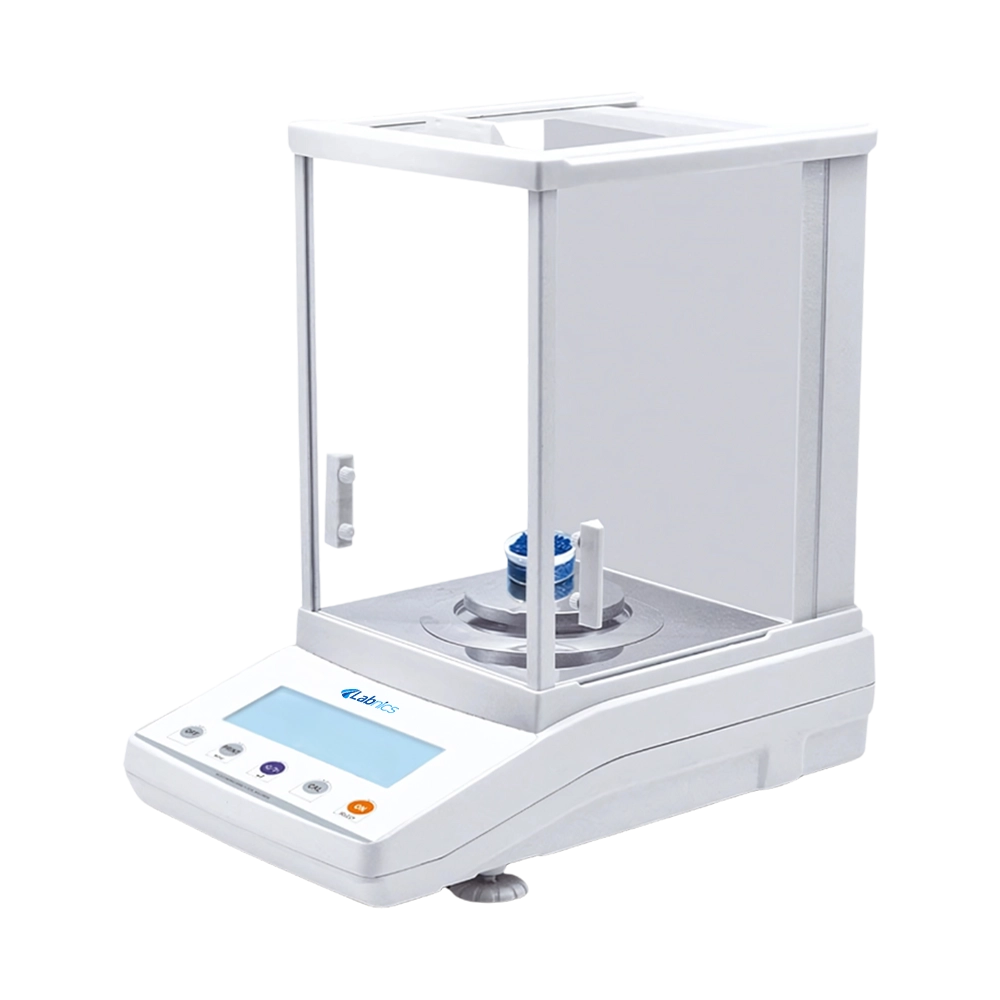
Analytical Balance NAB-301 is used to ensure precise and accurate measurements. It is employed in research laboratories, pharmaceutical companies, chemical industries, and educational institutions.
FAQ for Analytical Balance NAB-301
1: How does the level indicator contribute to accurate measurements?
The built-in level indicator ensures the balance is correctly positioned on a horizontal surface. This is essential to avoid weighing errors due to tilt or uneven surfaces.
2: What should I do if the balance takes longer than expected to stabilize?
Ensure the balance is placed on a vibration-free, level surface away from drafts. Also check for proper leveling, and avoid touching or leaning near the unit during measurement.
3: What safety features are included in the analytical balance NAB-301?
The analytical balance NAB-301 includes an overload alarm to prevent damage from excessive weight and fault protection features to alert users of operational errors or instability
4: Can I use the under-weighing option for density determination?
Yes, the analytical balance NAB-301 offers an optional under-weighing hook that allows for density and specific gravity testing, particularly useful in materials and fluid analysis.
5: How can I ensure the long-term accuracy and reliability of this balance?
Regular calibration with a certified weight, routine cleaning, and storing the unit in a dust-free, temperature-controlled environment will extend the balance's lifespan and maintain precision.
6: Why does the Analytical Balance have a glass shield?
The transparent glass shield is designed to block external air drafts and dust. This ensures consistent weighing conditions and prevents fluctuation in readings. It helps protect both the sample and the measurement integrity.
7: Is the Analytical Balance easy to calibrate?
Most analytical balances include internal or external calibration options. Internal calibration is automatic and ensures precision without manual effort. External calibration allows the use of certified weights to validate accuracy regularly.
8: How durable is an Analytical Balance?
Analytical balances are designed with sturdy materials and a sealed weighing chamber. This makes them durable and resistant to environmental contamination. Proper handling and regular maintenance extend their lifespan.
9: How often should an Analytical Balance be cleaned?
Cleaning should be done regularly, ideally after each use. This prevents dust, residue, or chemical spills from affecting accuracy. Use a soft brush or lint-free cloth and avoid harsh chemicals that may damage internal components.